Retail Media Was Built Around Search. Commerce Won't Be.

Our previous reflections on this shift: the exodus, why retail media stalls, and open ecosystem.
Search became the foundation of retail media for a simple reason: it captures intent better than almost any other signal. When a shopper searches for "wireless headphones" or "running shoes," advertisers know exactly what they're looking for, making sponsored search one of the most effective forms of commerce advertising.
That isn't changing. What's changing is the role search plays within commerce.
As retailers invest in richer shopping experiences, more discovery happens before a shopper ever types a query. Personalized homepages, recommendation modules, curated collections, AI shopping assistants, and category browsing are becoming just as important as the search box itself.
The next generation of commerce won't be organized around keywords alone. It will be organized around the many signals that influence what shoppers ultimately buy.
Commerce Doesn't Always Start With a Search
Imagine a shopper who clicks from TikTok to a retailer's website looking for summer fashion.
They might never use the search bar. Instead, they land on a personalized homepage, browse a curated collection, click a recommended outfit, and eventually purchase three complementary items suggested throughout the journey.
From the shopper's perspective, the experience is seamless. From a monetization perspective, however, a search-centric system has very little to optimize because no keyword was ever entered. Yet every recommendation, category ranking, and product placement influenced the final purchase.
As shopping journeys become more dynamic, those moments of discovery become just as valuable as traditional search.
The Infrastructure Is Starting to Change
This is why many retail media networks eventually hit a ceiling.
Search continues to generate strong revenue, but advertiser competition becomes concentrated around a relatively small set of high-intent keywords while much of the rest of the shopping experience remains under-monetized. Retailers respond by adding banner ads, recommendation units, category sponsorships, and offsite inventory, but these often operate as separate systems with their own auctions and optimization logic.
The result is more advertising surfaces without a unified way to decide where demand creates the most value.
Commerce, however, doesn't operate in silos. Every decision depends on a combination of signals: shopper behavior, inventory availability, pricing, margins, conversion probability, merchandising priorities, and advertiser demand. The more those signals can be evaluated together, the better the marketplace performs.
From Search Engine to Commerce Engine
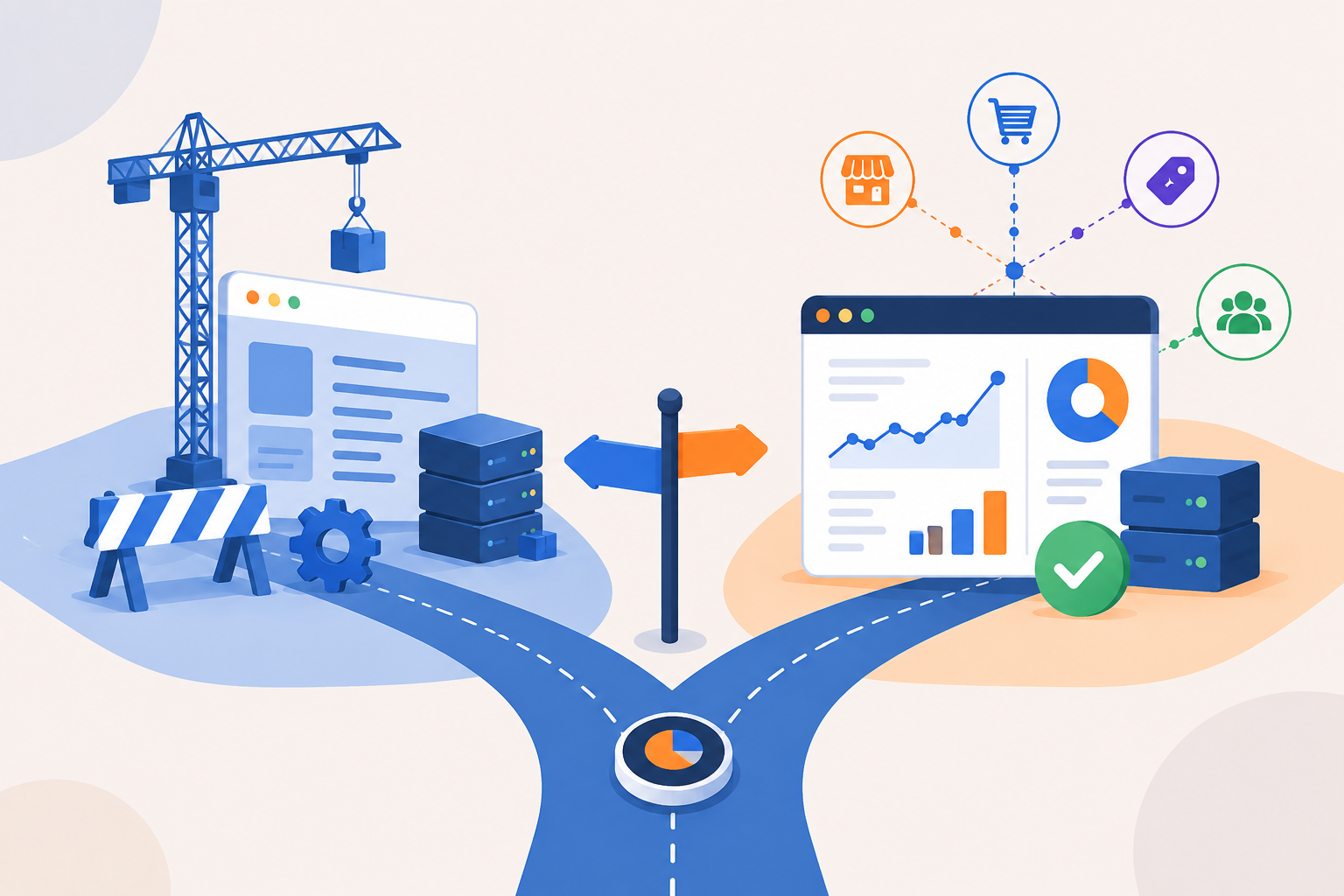
The shift underway isn't about replacing search. Search will remain one of the strongest signals in commerce. It is from building retail media around a single signal to building it around the marketplace as a whole.
Instead of treating search, recommendations, homepages, and category pages as separate monetization channels, the next generation of commerce infrastructure can evaluate every advertising opportunity within the same decision engine, optimizing across the entire shopping journey rather than a single touchpoint.
That's the approach Topsort has taken from the beginning. Rather than treating retail media as an advertising layer, we see it as part of the commerce infrastructure itself, where auctions, merchandising, shopper relevance, and business objectives work together to maximize value for retailers, advertisers, and consumers.
The Bottom Line
Search isn't disappearing. But commerce is becoming much bigger than search.
The retailers that lead the next phase won't be the ones with the most search traffic. They'll be the ones with infrastructure capable of making intelligent decisions wherever shoppers discover products.
Because retail media was built around search. Commerce won't be.
.png)
.png)