Retail Media Ad Server: What It Is and Why Commerce Platforms Need One
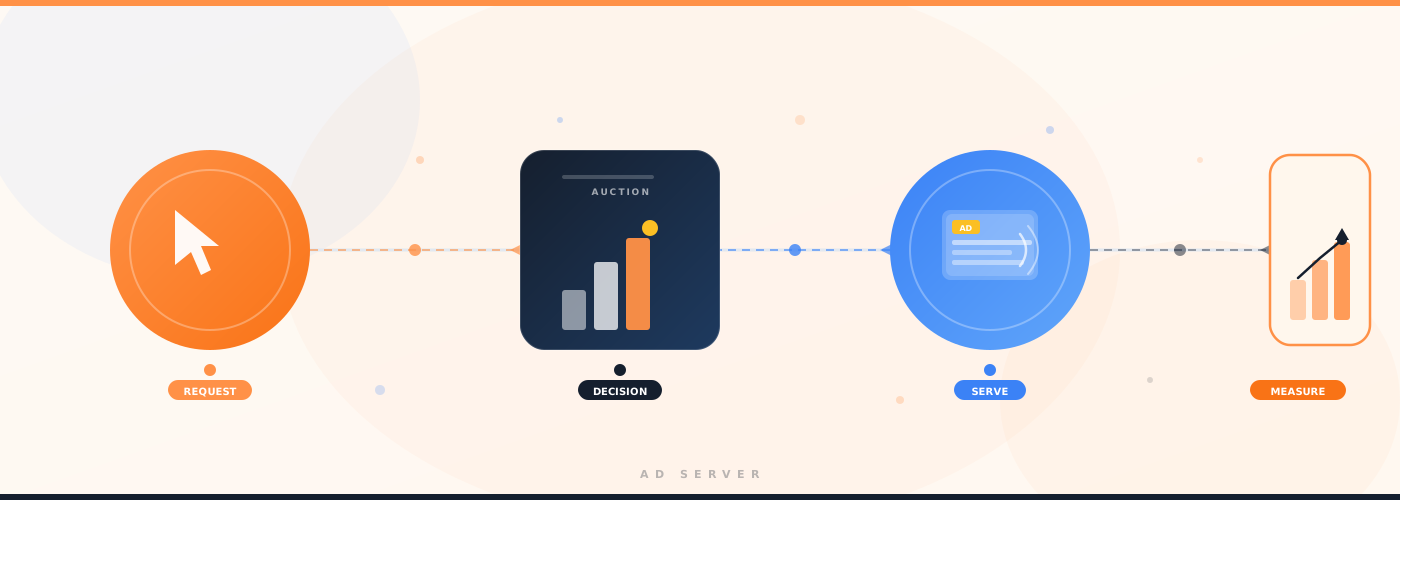
Retail media is not just about placing ads on a website or app. To run retail media at scale, commerce platforms need infrastructure that can decide which ads to show, track what happens, and report performance back to advertisers.
That infrastructure starts with a retail media ad server.
A retail media ad server helps retailers, marketplaces, delivery apps, travel platforms, and commerce businesses serve ads across owned commerce surfaces while connecting those ads to shopper behavior and purchase outcomes.
But a retail media ad server is different from a generic ad server.
Commerce platforms need ad serving that understands products, categories, sellers, bids, budgets, inventory, relevance, and transactions. Without that commerce context, retail media becomes harder to scale and harder to measure.
What is a retail media ad server?
A retail media ad server is technology that selects, delivers, tracks, and measures ads across retail or commerce environments. In short, a retail media ad server is the infrastructure that connects commerce intent to advertising decisions. It helps decide which sponsored product, display ad, or brand placement should appear, then tracks whether that ad led to engagement, purchases, and measurable revenue.
It helps answer:
- Which ad should be shown?
- Which placement should it appear in?
- Which advertiser is eligible?
- Which product is relevant?
- Which bid or campaign should win?
- Was the ad viewed or clicked?
- Did the shopper purchase?
- How should performance be reported?
In retail media, ad serving is closely connected to commerce outcomes. The goal is not only to deliver impressions. The goal is to help advertisers reach shoppers and measure business results.
How a retail media ad server works
A typical retail media ad serving flow looks like this:
- A shopper visits a commerce surface, such as search results or a product page.
- The platform sends an ad request.
- The ad server evaluates eligible campaigns.
- The auction or ranking system considers bids, budgets, relevance, and rules.
- The winning ad is returned.
- The ad is shown to the shopper.
- Impressions and clicks are tracked.
- Purchases are connected through attribution.
- Results appear in reporting.
This process happens quickly and needs to work reliably across many placements, campaigns, and products.
Why generic ad servers are not enough
Generic ad servers were not built specifically for commerce media.
They may be able to serve banners or track impressions, but retail media requires more.
A retail media ad server needs to understand:
- Product catalogs
- SKU IDs
- Seller or vendor data
- Search queries
- Category context
- Sponsored listings
- Real-time auctions
- Product relevance
- Inventory status
- Purchase events
- ROAS reporting
- Attribution windows
- Basket impact
- Incrementality
If the ad server cannot connect ads to commerce data, advertisers may not get the reporting they need.
Retail media is not just media delivery. It is commerce-connected advertising.This is why commerce platforms need ad serving built around products, sellers, auctions, purchase events, and retail media measurement—not only generic impression delivery.
Key capabilities of a retail media ad server
A strong retail media ad server should support several core capabilities.
Commerce-native ad serving
The system should understand products, sellers, categories, placements, and shopper context.
Sponsored products and listings
Sponsored listings are often the first major retail media format for marketplaces and commerce platforms.
Auction and ranking logic
The system should balance bids, budgets, relevance, and shopper experience.
Event tracking
Impressions, clicks, product views, and purchases need to be tracked clearly.
Attribution
Advertisers need to understand which sales were connected to ads.
Reporting
Retail media teams need reporting by campaign, product, seller, placement, and time period.
API integration
Commerce platforms need flexible APIs to connect the ad server with existing product, catalog, and event systems.
Optimization
Campaigns need pacing, bid optimization, performance insights, and outcome-driven improvements.
Why ad serving matters for shopper experience
Retail media should not hurt the shopping experience.
If ads are irrelevant, intrusive, or excessive, shoppers may lose trust. Poor ad relevance can also hurt advertiser performance.
A retail media ad server should help protect the shopper experience by considering:
- Search relevance
- Product quality
- Inventory availability
- Category match
- Placement context
- Frequency
- Sponsored labeling
- Landing page quality
The best retail media ad serving systems do not simply maximize short-term ad revenue. They balance monetization with relevance and conversion.
Retail media ad server vs retail media platform
A retail media ad server is one core part of a retail media platform.
The ad server handles ad selection, delivery, tracking, and measurement. A broader retail media platform may also include campaign management, advertiser tools, billing, creative workflows, analytics, offsite media, and managed-service workflows.
In simple terms:
- A retail media ad server powers ad delivery.
- A retail media platform powers the broader advertiser and operator experience.
Retailers and marketplaces often need both.
When do commerce platforms need a retail media ad server?
A commerce platform may need a retail media ad server when it wants to:
- Launch sponsored products
- Monetize search or category pages
- Sell display placements
- Support marketplace seller ads
- Track ad performance
- Report ROAS to advertisers
- Run auctions
- Protect shopper relevance
- Scale retail media revenue
- Build a self-serve or managed-service ad business
If a platform wants to turn commerce traffic into advertising revenue, ad serving infrastructure becomes essential.
How Topsort helps
Topsort helps commerce platforms build retail media programs with API-first ad serving, real-time auctions, sponsored listings, display ads, attribution, reporting, and AI optimization.
Because Topsort is built for commerce media, it helps connect ad requests, products, sellers, campaigns, placements, bids, budgets, impressions, clicks, and purchase events.
This gives retailers and marketplaces the foundation to serve relevant ads, measure commerce outcomes, and scale advertiser investment.
Final takeaway
A retail media ad server is the infrastructure that powers ad delivery, relevance, tracking, attribution, and reporting inside commerce environments.
Generic ad serving is not enough for modern retail media. Commerce platforms need ad serving that understands products, shoppers, sellers, auctions, and purchases.
For retailers, marketplaces, and commerce businesses, the right ad server can help turn owned traffic into a measurable, scalable retail media business.
FAQ
What is a retail media ad server?
A retail media ad server is technology that selects, delivers, tracks, and measures ads across retail or commerce environments.
How does a retail media ad server work?
It receives ad requests, evaluates eligible campaigns, runs auction or ranking logic, returns ads, tracks impressions and clicks, and connects purchases through attribution.
Why do retailers need a retail media ad server?
Retailers need a retail media ad server to monetize commerce surfaces, serve relevant ads, track performance, and report outcomes to advertisers.
What is the difference between a generic ad server and a retail media ad server?
A retail media ad server understands commerce data such as products, sellers, categories, search queries, purchase events, and ROAS reporting.
Is a retail media ad server the same as a retail media platform?
No. An ad server powers ad delivery and measurement. A retail media platform may include broader campaign tools, advertiser workflows, billing, analytics, and optimization.
Need commerce-native ad serving? See how Topsort helps retailers and marketplaces launch API-first retail media ad serving with auctions, attribution, reporting, and AI optimization.
.png)
.png)