
Closed-Loop Attribution for Retail Media: How to Connect Ads to Sales
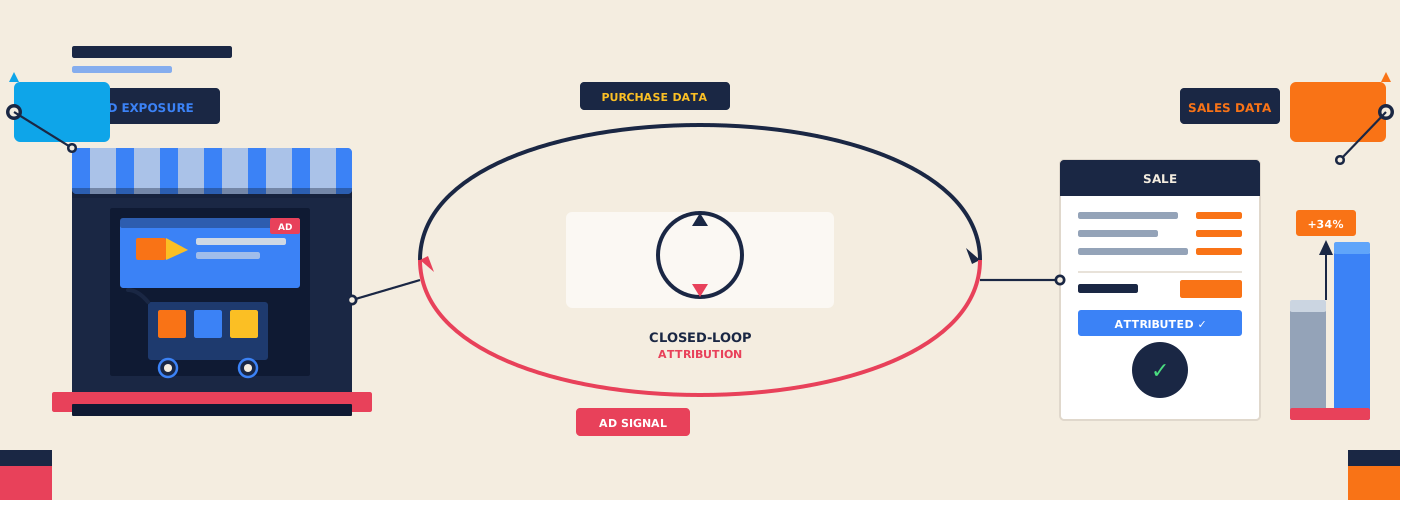
Retail media has one major advantage over many other advertising channels: it can connect media activity directly to commerce outcomes.
A shopper sees a sponsored product. They click. They view the product page. They purchase. The retailer or marketplace can connect those events and show the advertiser what happened.
That is the promise of closed-loop attribution.
For advertisers, closed-loop attribution makes retail media more measurable. For retailers, marketplaces, and commerce platforms, it helps prove the value of their ad inventory. For media teams, it creates the reporting foundation needed to grow budgets, improve campaign performance, and build long-term trust.
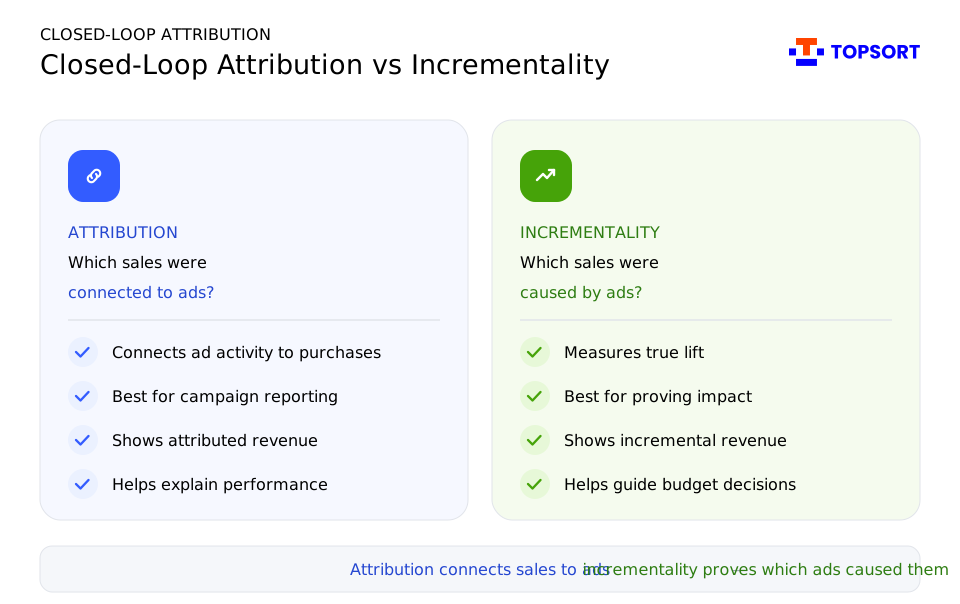
But closed-loop attribution is often misunderstood. It is powerful, but it is not the same as incrementality. Attribution shows which sales were connected to ads. Incrementality shows which sales were caused by ads.
To build a strong retail media measurement strategy, teams need to understand both.
What is closed-loop attribution in retail media?
Closed-loop attribution in retail media is the process of connecting ad exposure or engagement to downstream commerce outcomes, such as purchases, orders, revenue, or basket activity.
In simple terms, it closes the loop between advertising and sales.
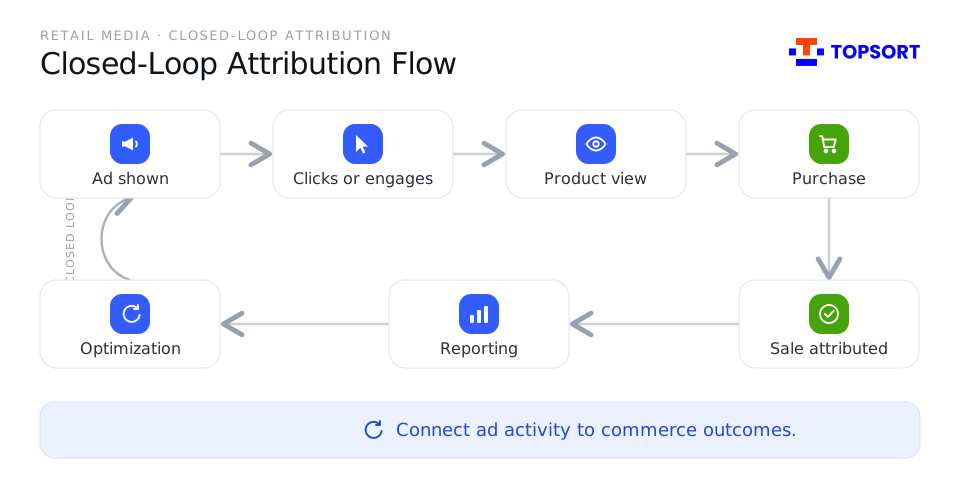
The flow looks like this:
Ad shown → shopper engages → purchase happens → sale is attributed back to the campaign
For example, a shopper may see a sponsored listing in search results, click the product, and complete a purchase within the attribution window. Closed-loop attribution connects that purchase back to the campaign that influenced it.
This gives advertisers visibility into how retail media campaigns perform beyond impressions and clicks.
Why closed-loop attribution matters
Closed-loop attribution matters because advertisers want to know whether their media investment is connected to business outcomes.
In traditional digital advertising, it can be difficult to connect an ad exposure to an actual purchase. Retail media is different because retailers and marketplaces often own the shopping environment, the product catalog, and the transaction data.
That creates a stronger measurement opportunity.
Closed-loop attribution helps:
- Advertisers understand campaign performance
- Retailers prove the value of their media inventory
- Marketplaces help sellers evaluate ad spendc
- Media teams optimize placements and budgets
- Brands compare retail media with other channels
- Operators connect campaign activity to sales outcomes
For retail media networks, closed-loop attribution is not just a reporting feature. It is part of the value proposition.
How closed-loop attribution works
Closed-loop attribution connects media events to commerce events.
A typical process looks like this:
1. The shopper sees or clicks an ad
The platform records an impression, click, or other engagement event. This event is tied to a campaign, product, placement, seller, brand, or audience.
2. The shopper continues the shopping journey
The shopper may view a product page, add an item to cart, compare products, or continue browsing.
3. The shopper makes a purchase
The platform records a purchase event, including details such as product ID, order value, quantity, seller, brand, and timestamp.
4. The purchase is matched to the campaign
The system checks whether the purchase happened after a qualifying ad exposure or click within a defined attribution window.
5. Revenue is attributed
If the purchase qualifies, revenue or conversion credit is assigned to the campaign based on the platform’s attribution rules.
6. Results appear in reporting
The advertiser can see campaign performance, including attributed sales, revenue, ROAS, conversions, and product-level outcomes.
This closed loop is what makes retail media especially powerful for performance measurement.
What data is needed for closed-loop attribution?
Closed-loop attribution depends on clean, connected commerce and advertising data.
Important data points include:
- Ad impression data
- Click data
- Campaign ID
- Creative ID
- Placement ID
- Product or SKU ID
- Seller or brand ID
- User, account, or session identifier where privacy-compliant
- Purchase event
- Order value
- Quantity purchased
- Timestamp
- Attribution window
- Device or channel context
- Product category
- Basket data
The more connected the data is, the more useful the reporting becomes.
For example, SKU-level attribution can help advertisers understand which promoted products drove purchases. Basket-level attribution can help advertisers understand whether ads influenced broader cart value. Placement-level attribution can help media teams understand which surfaces are most effective.
Common attribution models in retail media
Retail media platforms may use different attribution models depending on the campaign type and measurement goals.
Click-through attribution
Click-through attribution gives credit when a shopper clicks an ad and later purchases within the attribution window.
This is common for sponsored products and lower-funnel campaigns because clicks show direct engagement.
View-through attribution
View-through attribution gives credit when a shopper sees an ad and later purchases, even if they did not click.
This can be useful for display, video, and awareness-oriented placements, but it requires careful methodology to avoid over-crediting.
Last-touch attribution
Last-touch attribution gives credit to the final qualifying ad interaction before purchase.
It is simple and easy to explain, but it may undervalue earlier touchpoints.
Multi-touch attribution
Multi-touch attribution distributes credit across multiple interactions in the shopper journey.
This can provide a more complete view, but it is more complex to implement and explain.
SKU-level attribution
SKU-level attribution connects ad activity to purchases of specific products.
This is especially useful for sponsored listings and marketplace advertising.
Basket-level attribution
Basket-level attribution looks at broader basket impact, not just the promoted item.
This can help advertisers understand whether campaigns influence total order value, cross-sell behavior, or category growth.
There is no single perfect attribution model. The right model depends on the campaign objective, advertiser expectations, and platform capabilities.
Closed-loop attribution vs incrementality
Closed-loop attribution and incrementality are related, but they answer different questions.
Closed-loop attribution answers:
Which sales were connected to the ad?
Incrementality answers:
Which sales were caused by the ad?
This distinction is important.
A shopper may click an ad and buy a product. Closed-loop attribution can connect that sale to the campaign. But the shopper may have already intended to buy that product. Incrementality helps estimate whether the ad created additional impact beyond what would have happened anyway.
Retail media teams need both.
Closed-loop attribution gives advertisers timely, actionable reporting. Incrementality gives advertisers confidence that their spend is creating real business growth.
Why retail media is well-positioned for closed-loop measurement
Retail media is uniquely suited for closed-loop attribution because commerce platforms have access to first-party shopping and transaction signals.
These signals can include:
- Search behavior
- Product views
- Category browsing
- Add-to-cart events
- Purchases
- Order value
- Product catalog data
- Seller or brand data
- Promotions
- Inventory status
- Repeat purchase behavior
This gives retailers and marketplaces a measurement advantage.
Unlike many advertising channels that rely heavily on external tracking or third-party signals, retail media can often connect ads to actual commerce outcomes inside the same ecosystem.
That makes closed-loop attribution one of retail media’s strongest selling points.
Challenges of closed-loop attribution
Closed-loop attribution is powerful, but it is not perfect. Retail media teams need to be transparent about how attribution works and what its limitations are.
Common challenges include:
Attribution windows affect results
A longer attribution window may capture more sales, but it may also increase the chance of crediting sales that were less directly influenced by the ad. A shorter window may be more conservative but could miss delayed purchases.
Overlapping campaigns can create double-counting
A shopper may see multiple ads from the same brand or different campaigns before buying. Without clear rules, multiple campaigns may claim credit for the same purchase.
Organic demand can be over-credited
Some shoppers may have purchased even without advertising. Attribution connects the sale to the campaign, but it does not always prove causation.
Online and offline behavior can be difficult to connect
For omnichannel retailers, a shopper may see an ad online and purchase in-store. Connecting those events requires strong data infrastructure and privacy-conscious identity resolution.
Privacy rules require careful data handling
Retail media platforms must manage user data responsibly and comply with privacy requirements. Measurement should be designed with data minimization, security, and transparency in mind.
These challenges do not reduce the value of closed-loop attribution. They show why clear methodology matters.
How to build trustworthy closed-loop attribution
Advertisers trust measurement when it is clear, consistent, and actionable.
Retail media networks can build stronger closed-loop attribution by following a few principles.
1. Define attribution rules clearly
Advertisers should understand what counts as an attributed sale, how attribution windows work, and whether reporting includes click-through, view-through, or both.
2. Connect reporting to commerce outcomes
Reporting should go beyond impressions and clicks. It should connect campaigns to purchases, revenue, orders, products, and basket-level outcomes.
3. Avoid double-counting where possible
If multiple campaigns influence the same purchase, platforms should use clear rules to determine how credit is assigned.
4. Show results at useful levels of detail
Advertisers may need reporting by campaign, product, placement, seller, category, or audience. Granular reporting helps teams make better decisions.
5. Pair attribution with incrementality
Attribution is essential for campaign reporting, but incrementality helps prove true lift. Retail media programs become more credible when they can support both.
6. Make methodology transparent
Advertisers do not need every technical detail, but they do need confidence in how results are calculated. Clear definitions build trust.
How closed-loop attribution helps optimize campaigns
Closed-loop attribution is not only useful after a campaign ends. It can also improve campaign optimization while campaigns are running.
With connected reporting, media teams can identify:
- Which products drive the most attributed revenue
- Which placements generate stronger purchase behavior
- Which audiences convert more efficiently
- Which campaigns need budget adjustments
- Which sellers or brands are getting the best outcomes
- Which categories are responding to media investment
These insights can inform bidding, pacing, targeting, product strategy, and creative decisions.
In mature retail media programs, attribution data becomes part of the optimization loop.
How Topsort supports closed-loop retail media measurement
Topsort helps retailers, marketplaces, delivery apps, travel platforms, and commerce businesses build retail media programs with API-first ad serving, auctions, sponsored listings, attribution, reporting, and AI optimization.
Because Topsort is built for commerce media, it helps connect ad delivery to real shopping and purchase signals. This gives media teams the infrastructure to track campaign activity, connect it to commerce outcomes, and give advertisers clearer performance reporting.
With Topsort, commerce platforms can build retail media programs that support:
- Sponsored listings and native ad placements
- Real-time auctions
- Campaign and product-level reporting
- Ad event tracking
- Purchase-based attribution
- Outcome-driven optimization
- Transparent advertiser reporting
Closed-loop attribution is a foundation for advertiser trust. Topsort helps commerce businesses build that foundation with flexible, API-first retail media infrastructure.
Final takeaway
Closed-loop attribution is one of retail media’s biggest advantages.
It helps connect ads to sales, gives advertisers clearer reporting, and helps retailers and marketplaces prove the value of their media inventory. But attribution alone is not the full measurement picture.
Closed-loop attribution shows which sales were connected to ads. Incrementality shows which sales were caused by ads.
The strongest retail media programs use both. They give advertisers the reporting they need to manage campaigns and the measurement confidence they need to grow investment.
As retail media becomes more competitive, transparent measurement will become a key differentiator. Platforms that can connect media activity to commerce outcomes clearly will be better positioned to win advertiser trust and scale long-term revenue.
FAQ
What is closed-loop attribution in retail media?
Closed-loop attribution connects ad exposure or engagement to downstream commerce outcomes such as purchases, orders, revenue, or basket activity.
How does closed-loop attribution work?
It tracks ad impressions or clicks, connects them to purchase events, and attributes sales back to the campaign based on defined attribution rules.
Why is closed-loop attribution important?
Closed-loop attribution helps advertisers understand campaign performance and helps retail media networks prove the value of their ad inventory.
What is the difference between closed-loop attribution and incrementality?
Closed-loop attribution shows which sales were connected to ads. Incrementality shows which sales were caused by ads.
What data is needed for closed-loop attribution?
Retail media platforms typically need ad exposure data, click data, campaign IDs, product IDs, purchase events, order value, timestamps, and attribution windows.
Is closed-loop attribution enough to prove ad impact?
Not always. Closed-loop attribution connects ads to sales, but it does not always prove causation. For stronger proof of impact, advertisers should also use incrementality measurement.
How can retail media networks make attribution more trustworthy?
They can define attribution rules clearly, use transparent attribution windows, avoid double-counting, report commerce outcomes, and pair attribution with incrementality testing.
.png)
.png)