Build vs Buy Retail Media Platform: Which Path Is Right for Retailers and Marketplaces?
Retailers, marketplaces, and commerce platforms are increasingly looking at retail media as a new growth channel.
The opportunity is clear: commerce platforms already have shopper traffic, product discovery moments, purchase intent, and first-party transaction data. Turning those assets into a media business can create a valuable revenue stream.
But one major question comes early:
Should we build retail media technology in-house, or partner with a retail media platform?
The real question is not only whether a team can build retail media technology. It is whether the business can launch fast enough, prove ROI to advertisers, maintain the infrastructure, and keep improving the product as brand expectations grow.
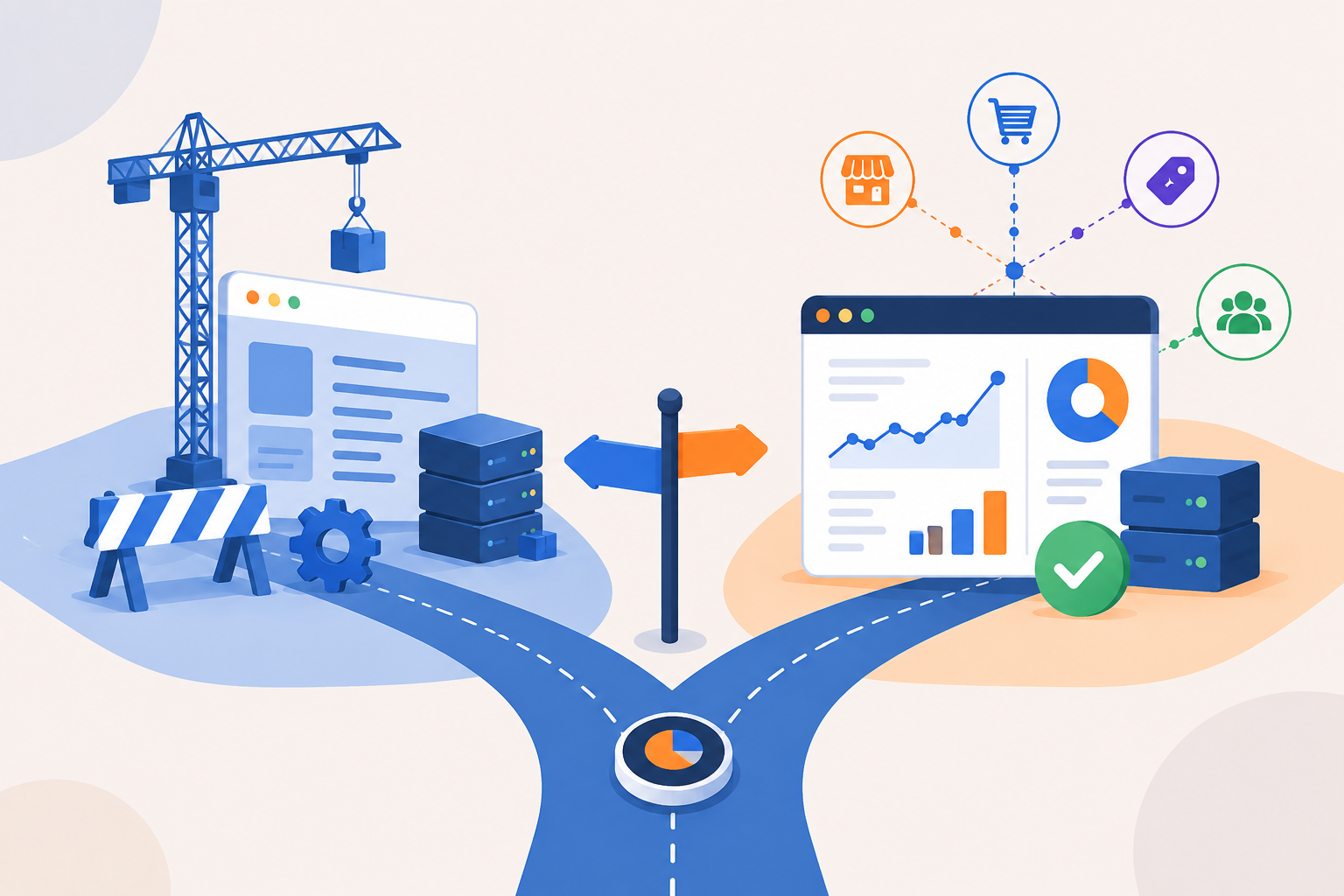
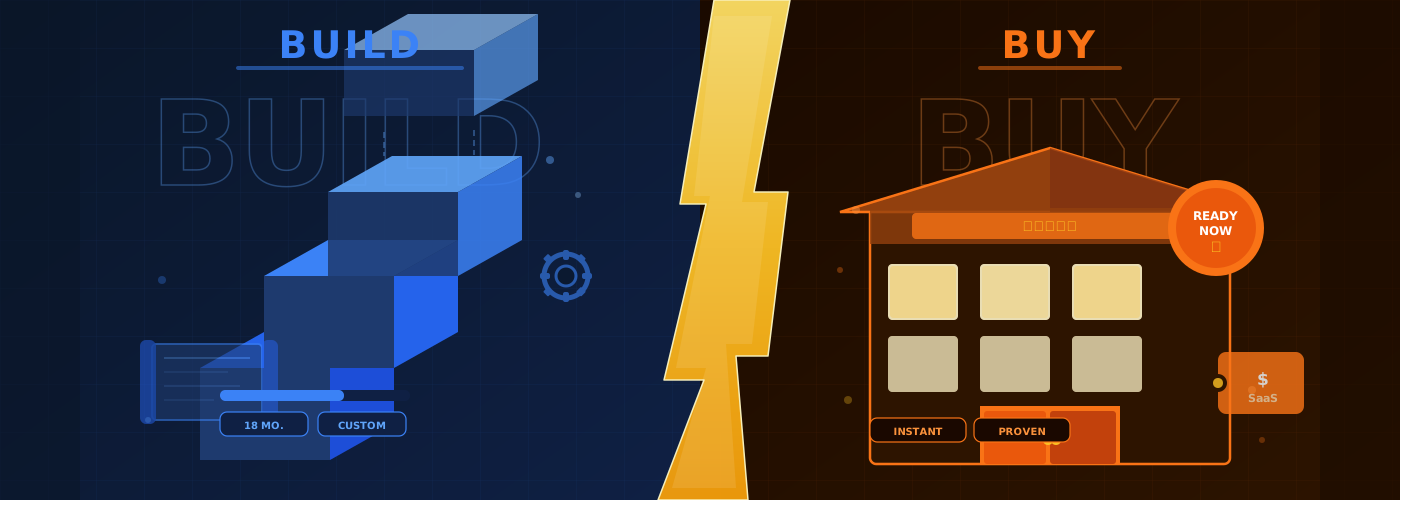
Therefore, there is no one-size-fits-all answer. Building gives control. Buying can help teams launch faster. The right path depends on your resources, timeline, technical complexity, advertiser needs, and long-term strategy.
This guide explains the tradeoffs.
What does it mean to build a retail media platform?
Building a retail media platform in-house means your team develops the technology needed to run advertising across your commerce surfaces.
This usually includes:
- Ad serving
- Auction logic
- Campaign management
- Sponsored listings
- Display placements
- Targeting
- Event tracking
- Attribution
- Reporting
- Billing
- Budget pacing
- Optimization
- Advertiser tools
- APIs and integrations
Building in-house can be attractive for teams that want maximum control over the product experience and data architecture.
But retail media is not just a feature. It is an advertising infrastructure business. Maintaining it requires ongoing engineering, product, data, and operations investment.
What does it mean to buy or partner?
Buying or partnering means working with a retail media platform that provides core infrastructure for ad serving, auctions, attribution, reporting, and campaign management.
This can help commerce platforms launch faster without building every component from scratch.
A good retail media platform should provide flexibility, not a rigid one-size-fits-all system. For retailers and marketplaces, API-first infrastructure is often important because the ad experience needs to fit into existing product surfaces, catalog systems, and commerce workflows.
Benefits of building in-house
Building in-house can make sense for some organizations.
More control
An internal team can design the system around specific business rules, product experience, and advertiser needs.
Custom workflows
If your retail media business has highly unique requirements, an in-house system can be tailored deeply to your platform.
Direct ownership
Your team owns the roadmap, data flows, product experience, and long-term technical decisions.
Potential long-term flexibility
If the company has enough engineering resources, an internal platform may evolve into a highly customized advantage.
Challenges of building in-house
Building retail media technology is more complex than many teams expect.
It takes time
Launching ad serving, campaign tools, event tracking, attribution, and reporting can take months or years depending on the scope.
It requires specialized expertise
Retail media combines advertising systems, commerce data, auction logic, reporting, attribution, billing, and product experience.
Maintenance never stops
Campaign tools need updates. Attribution rules evolve. Advertisers ask for new reports. Auction logic needs tuning. Privacy and data requirements change.
Opportunity cost is high
Every engineering hour spent building ad infrastructure is an hour not spent on core marketplace, retail, or commerce product development.
Advertiser expectations rise quickly
Brands and sellers expect reporting, pacing, attribution, and optimization. A basic MVP may not be enough for long.
Benefits of buying or partnering
Partnering with a retail media platform can help teams move faster and reduce technical burden.
For many retailers and marketplaces, an API-first partner can provide the infrastructure layer while the commerce team keeps control over the shopper experience, product surfaces, and business strategy.
Faster launch
A platform can help retailers and marketplaces launch sponsored listings, auctions, reporting, and attribution more quickly.
Proven infrastructure
Retail media platforms already support core components such as ad serving, event tracking, campaign management, and measurement.
Less engineering burden
Internal teams can focus on integration, product experience, and strategy instead of building every advertising system from zero.
Access to retail media expertise
A strong partner brings knowledge from other commerce platforms and can help avoid common mistakes.
Easier scaling
As advertiser demand grows, platform infrastructure can support more campaigns, placements, and reporting needs.
Challenges of buying or partnering
Buying is not always perfect.
Less control if the platform is rigid
Some platforms force a predefined experience that may not fit your commerce product.
Integration still matters
Even with a partner, your team needs to connect product catalog, events, placements, and reporting data.
Vendor evaluation is important
Not every platform is commerce-native. Generic ad tech may not support retail media-specific needs like product-level relevance, SKU attribution, or purchase-based reporting.
The key is choosing a partner that provides infrastructure flexibility and understands commerce media.
What retail media infrastructure needs to support
Whether you build or buy, the platform needs to support the core building blocks of retail media:
- Commerce-native ad serving
- Sponsored products or listings
- Display or brand placements
- Auction and ranking logic
- Product catalog integration
- Impression and click tracking
- Purchase event tracking
- Attribution windows
- Campaign reporting
- ROAS reporting
- Incrementality support
- Budget pacing
- Billing and advertiser management
- API integration
- Shopper experience controls
If a system cannot connect ads to commerce outcomes, it will be difficult to prove value to advertisers.
When building may be the right choice
Building may make sense if:
- You have a large engineering team
- Retail media is a major strategic investment
- You need highly custom infrastructure
- You can support long-term maintenance
- You already have ad tech expertise internally
- You are willing to delay launch for control
This path can work, but teams should be honest about the cost and timeline.
When buying may be the right choice
Partnering with a retail media platform may make sense if:
- You want to launch faster
- You have limited ad tech engineering resources
- You need commerce-native ad serving and attribution
- You want to test retail media demand before a large build
- You need flexible APIs
- You want to scale with fewer operational bottlenecks
- You need reporting brands can trust
For many retailers and marketplaces, buying or partnering helps reduce risk while accelerating time to revenue.
The hybrid approach
Some teams choose a hybrid approach.
They build the shopper-facing product experience internally while using a partner for core retail media infrastructure such as ad serving, auctions, attribution, and reporting.
This can provide the best of both worlds:
- Control over user experience
- Faster launch
- Less infrastructure burden
- Flexible integration
- Scalable advertising capabilities
For commerce platforms, this is often the most practical path.
How Topsort helps
Topsort helps retailers, marketplaces, delivery apps, travel platforms, and commerce businesses build retail media programs with API-first infrastructure.
Topsort supports commerce-native ad serving, real-time auctions, sponsored listings, display ads, attribution, reporting, and AI optimization.
This helps teams launch and scale retail media without building every system from scratch.
With Topsort, commerce platforms can connect:
- Products
- Sellers
- Campaigns
- Placements
- Bids and budgets
- Impressions
- Clicks
- Purchase events
- Attribution
- Reporting
- Optimization
The goal is to help retailers and marketplaces build trusted, measurable retail media businesses faster.
Final takeaway
The build vs buy decision is not only a technology decision. It is a business strategy decision.
Building in-house can offer control, but it requires time, expertise, and ongoing investment. Partnering with a retail media platform can help teams launch faster, reduce complexity, and scale with proven infrastructure.
For many commerce platforms, the right question is not simply “Can we build this?”
The better question is:
How quickly can we launch, prove value to advertisers, and scale a trusted retail media business?
FAQ
Should retailers build or buy retail media technology?
It depends on resources, timeline, control needs, and advertiser expectations. Building offers control, while buying can help teams launch faster and reduce technical complexity.
What technology is needed for a retail media platform?
Retail media platforms need ad serving, auctions, campaign tools, product catalog integration, event tracking, attribution, reporting, billing, and optimization.
Why is retail media infrastructure hard to build?
Retail media requires specialized systems for commerce-native ad serving, product relevance, purchase tracking, attribution, reporting, and campaign optimization.
What is the advantage of an API-first retail media platform?
An API-first platform can integrate into existing commerce experiences while supporting ad serving, auctions, attribution, and reporting.
When should a marketplace partner with a retail media platform?
A marketplace should consider partnering when it wants to launch faster, support sponsored listings, measure performance, and scale advertiser demand without building all infrastructure internally.
Ready to launch retail media without building everything from scratch? See how Topsort helps retailers and marketplaces scale API-first retail media infrastructure.
.png)
.png)