AI in Retail Media: How AI Is Changing Ad Serving, Optimization, and Measurement

Retail media is becoming more complex. Retailers and marketplaces need to manage more advertisers, more placements, more campaigns, more products, and more measurement expectations than ever before.
At the same time, brands want better performance with less manual work. They want campaigns that can optimize toward real commerce outcomes, not just impressions or clicks.
This is why AI is becoming one of the most important shifts in retail media.
AI in retail media is not just about generating ad copy or automating reports. The bigger opportunity is using AI to improve how ads are served, ranked, optimized, measured, and scaled across commerce environments.
For retailers, marketplaces, delivery apps, and commerce platforms, AI can help turn retail media from a manual ad business into a smarter, outcome-driven growth engine.
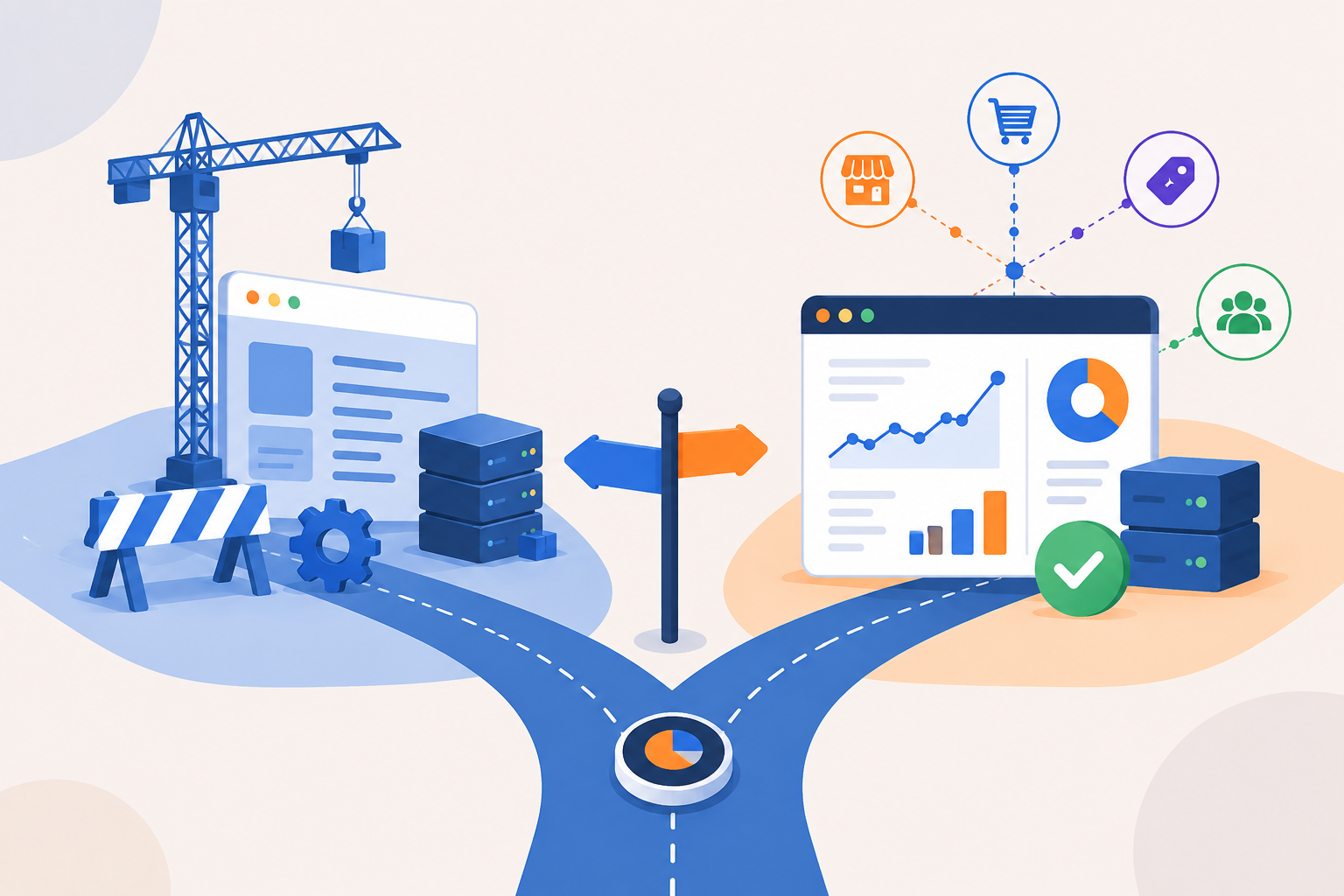
At Topsort, we see AI in retail media as more than campaign automation. The bigger shift is moving from manual media operations to commerce-aware optimization, where ad serving, auctions, measurement, and reporting work together to improve outcomes for shoppers, advertisers, and commerce platforms.
What is AI in retail media?
AI in retail media refers to the use of machine learning, automation, and intelligent decisioning to improve how retail media campaigns are delivered and optimized.
In simple terms, AI helps retail media platforms answer questions like:
- Which ad should be shown?
- Which product is most relevant to this shopper?
- Which campaign should receive budget?
- Which placement is likely to drive the best outcome?
- Which bid or budget adjustment should happen next?
- Which campaigns are underperforming?
- Which results are truly meaningful?
Retail media creates a large amount of commerce data, including product views, search queries, clicks, purchases, basket behavior, seller data, and campaign performance. AI can help make those signals actionable.
Why AI matters for retail media
Retail media is different from traditional digital advertising because it happens inside commerce environments.
A shopper may be searching for a specific product, comparing alternatives, browsing a category, or adding items to cart. These moments are highly valuable, but they require relevance.
AI can help retail media networks improve relevance by connecting:
- Shopper intent
- Product data
- Campaign goals
- Bids and budgets
- Placement context
- Purchase behavior
- Measurement outcomes
Without automation, retail media teams may rely too heavily on manual campaign setup and optimization. That can limit scale, especially as the number of advertisers and campaigns grows.
AI helps retail media networks scale without sacrificing performance or shopper experience.
How AI improves ad serving
Ad serving is the foundation of retail media. It decides which ad appears, where it appears, and when it appears.
In retail media, ad serving needs to understand commerce context. A generic ad server may only evaluate targeting and delivery rules. A commerce-native ad server needs to consider products, categories, sellers, bids, budgets, inventory, relevance, and purchase likelihood.
AI can improve ad serving by helping predict:
- Which products are most relevant to a shopper
- Which ads are likely to drive engagement
- Which placements are likely to convert
- Which campaigns should be prioritized
- Which products should not be promoted because of low relevance or inventory issues
The goal is not simply to show the highest bidder. The goal is to show ads that are relevant to shoppers and valuable to advertisers.
How AI improves campaign optimization
Retail media campaigns often require constant optimization. Budgets need to pace correctly. Bids need to be adjusted. Products need to be promoted or paused. Placements need to be evaluated.
AI can help automate these decisions.
AI-powered campaign optimization can support:
- Budget pacing
- Bid optimization
- Product recommendations
- Placement optimization
- Campaign anomaly detection
- Performance forecasting
- Audience and keyword recommendations
- Automated reporting insights
For brands and sellers, this means less manual work and better outcomes. For retail media teams, it means the ability to manage more campaigns without increasing operational complexity.
This is why AI works best when it is connected to API-first retail media infrastructure, including ad serving, auctions, attribution, and reporting.
How AI improves retail media measurement
AI can also support better measurement.
Retail media networks need to report not only what happened, but what mattered. Brands want to understand attributed sales, ROAS, incremental revenue, basket impact, new customers, and campaign performance across placements.
AI can help identify patterns across campaign data and surface insights such as:
- Which placements are driving stronger conversion
- Which campaigns are improving over time
- Which products are underperforming
- Which advertisers may need budget recommendations
- Which results may be influenced by seasonality or baseline demand
- Which campaigns may require incrementality testing
AI does not replace measurement methodology. Retail media teams still need clear attribution rules, clean event tracking, and transparent reporting. But AI can help make measurement more actionable.
AI and shopper relevance
One of the biggest risks in retail media is showing ads that feel irrelevant or disruptive.
If retail media networks prioritize monetization over relevance, they may hurt the shopper experience. Shoppers may ignore ads, advertisers may see lower performance, and the platform may lose trust.
AI can help protect the shopper experience by improving relevance.
For example, if a shopper searches for “running shoes,” the platform should prioritize ads that match the query, category, availability, and shopper intent. An unrelated product with a higher bid should not automatically win.
The best retail media AI systems balance monetization, relevance, and shopper experience.
What retailers should look for in an AI retail media platform
Retailers and marketplaces evaluating AI retail media technology should look for capabilities that connect intelligence to commerce outcomes.
Important capabilities include:
- Commerce-native ad serving
- Real-time auction logic
- Product-level relevance
- Campaign automation
- Budget pacing
- Attribution and reporting
- Incrementality support
- API-first integration
- AI optimization connected to purchase outcomes
AI is only useful if it is connected to the right data and infrastructure. A retail media AI system should understand commerce, not just media delivery.
How Topsort supports AI-powered retail media
Topsort helps retailers, marketplaces, delivery apps, travel platforms, and commerce businesses build retail media programs with API-first ad serving, auctions, sponsored listings, attribution, reporting, and AI optimization.
Because Topsort is built for commerce media, it helps connect AI optimization to the signals that matter: products, sellers, campaigns, placements, bids, budgets, impressions, clicks, purchases, and revenue outcomes.
For commerce platforms, the goal is not just to automate advertising. The goal is to build a retail media business that can serve relevant ads, prove performance, and scale advertiser investment.
Final takeaway
AI is changing retail media by making ad serving, optimization, and measurement more intelligent.
The biggest opportunity is not replacing human teams. It is helping retail media teams manage complexity, improve relevance, optimize campaigns, and connect media activity to real commerce outcomes.
As retail media grows, AI will become a key part of how platforms scale performance, protect shopper experience, and build advertiser trust.
FAQ
What is AI in retail media?
AI in retail media uses machine learning and automation to improve ad serving, campaign optimization, measurement, reporting, and shopper relevance.
How does AI improve retail media campaigns?
AI can help optimize bids, budgets, pacing, product selection, placements, and reporting insights based on commerce signals and campaign performance.
Why does AI matter for retail media networks?
AI helps retail media networks scale more campaigns, improve relevance, reduce manual work, and optimize toward business outcomes such as sales and ROAS.
Can AI improve retail media measurement?
Yes. AI can help identify performance patterns, surface reporting insights, and support more actionable campaign optimization, but it still needs strong attribution and event tracking.
What should retailers look for in an AI retail media platform?
Retailers should look for commerce-native ad serving, real-time auctions, attribution, reporting, API-first integration, and AI optimization connected to purchase outcomes.
Ready to scale smarter retail media? See how Topsort helps commerce platforms connect ad serving, attribution, reporting, and AI optimization through API-first retail media infrastructure.
.png)
.png)