Marketplace Advertising Platform: How Marketplaces Can Monetize Search and Product Discovery
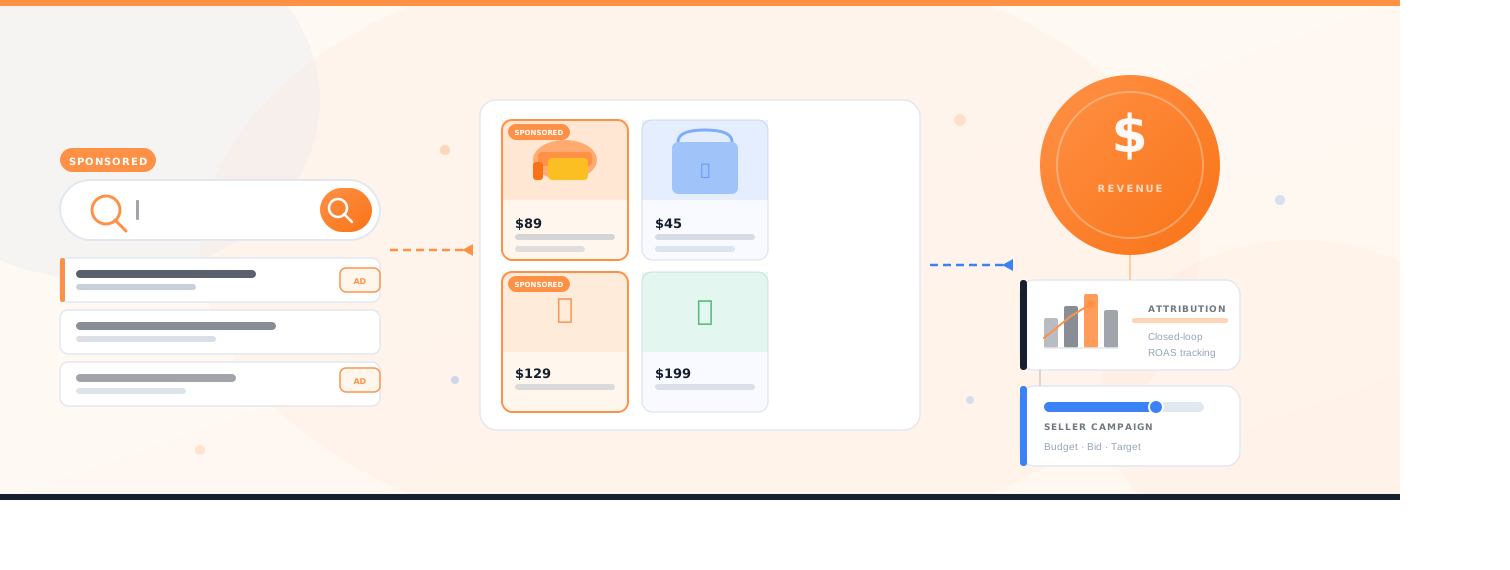
Marketplaces have a powerful advantage: they sit at the center of product discovery.
Every search query, listing view, category visit, and purchase creates commercial intent. Sellers want visibility. Buyers want relevant results. The marketplace wants to grow revenue without damaging trust.
A marketplace advertising platform helps connect those needs. For marketplaces, advertising only works when it improves discovery instead of disrupting it. The best marketplace ad systems balance seller monetization, buyer relevance, and measurable performance.
It allows marketplaces to launch sponsored listings, promote products or services, measure campaign performance, and create a new revenue stream from existing traffic.
But marketplace advertising is not just about inserting ads into search results. It requires relevance, auction logic, attribution, reporting, and a strong seller experience.
What is a marketplace advertising platform?
A marketplace advertising platform is technology that helps marketplaces sell, serve, measure, and optimize ads across marketplace surfaces.
It can support ad formats such as:
- Sponsored listings
- Sponsored products
- Promoted sellers
- Featured placements
- Display ads
- Category placements
- Homepage placements
- Offsite campaigns
The goal is to help sellers or advertisers reach buyers during discovery and purchase moments.
For example, a seller may promote a product in search results. A restaurant may promote a listing in a delivery app. A hotel may promote availability in a travel marketplace. A service provider may promote a listing in a classifieds platform.
Why marketplaces need advertising
Marketplaces often have valuable traffic but limited monetization options.
Marketplace advertising can help:
- Create new revenue
- Help sellers increase visibility
- Improve product discovery
- Monetize high-intent search results
- Support long-tail sellers
- Offer performance-based promotion
- Increase seller retention
- Build a stronger marketplace economy
Advertising can be especially valuable when the marketplace has many sellers competing for visibility.
Why relevance matters
Marketplace ads need to feel useful.
If a buyer searches for “running shoes,” sponsored results should be relevant to running shoes. If irrelevant ads appear, the buyer experience gets worse.
A strong marketplace advertising platform should balance:
- Bid
- Relevance
- Seller eligibility
- Product quality
- Inventory or availability
- Conversion likelihood
- Placement context
- Buyer experience
This balance is important because marketplaces depend on trust. Ads should help discovery, not interrupt it.
Sponsored listings for marketplaces
Sponsored listings are often the most important marketplace ad format.
They allow sellers to promote listings in search results, category pages, or recommendation modules.
Sponsored listings work well because they are native to the marketplace experience. Buyers are already browsing listings, and sellers want more visibility.
Sponsored listings are useful for:
- Product marketplaces
- Delivery apps
- Travel platforms
- Real estate platforms
- Job marketplaces
- Classifieds businesses
- Service marketplaces
They can be priced through CPC, CPM, CPA, or auction-based models, depending on the marketplace strategy.Sponsored listings usually become the first scalable ad format because they fit naturally into marketplace search, category, and discovery experiences.
Marketplace ad serving
Marketplace advertising requires ad serving infrastructure that understands marketplace context.
A marketplace ad server should process signals such as:
- Search query
- Category
- Listing ID
- Seller ID
- Bid
- Budget
- Placement
- Availability
- Location
- Relevance
- Buyer context, where privacy-compliant
- Conversion events
This allows the platform to choose ads that are relevant and measurable.
Attribution and reporting
Sellers need to understand whether advertising is working.
A marketplace advertising platform should report:
- Spend
- Impressions
- Clicks
- Click-through rate
- Orders or conversions
- Attributed revenue
- ROAS
- Cost per conversion
- Listing-level performance
- Placement-level performance
- Budget pacing
For marketplaces, transparent reporting is critical. If sellers cannot understand performance, they may not continue investing.
Self-serve vs managed-service marketplace ads
Marketplaces can offer advertising through self-serve tools, managed service, or a mix of both.
Self-serve
Self-serve works well when there are many sellers who need simple campaign tools. Sellers can choose products, set budgets, and monitor performance.
Managed service
Managed service may work better for larger advertisers, strategic accounts, or premium placements.
Hybrid model
Many marketplaces start with managed service, then move toward self-serve as advertiser demand grows.
The right model depends on seller sophistication, marketplace size, and internal resources.
What to look for in a marketplace advertising platform
A strong marketplace advertising platform should support:
- Sponsored listings
- Commerce-native ad serving
- Auction logic
- Seller-level campaign management
- Product or listing-level targeting
- Event tracking
- Attribution
- Reporting
- Budget pacing
- API integration
- Relevance controls
- Optimization
The platform should help sellers promote effectively while helping the marketplace protect buyer trust.
How Topsort helps marketplaces
Topsort helps marketplaces build and scale advertising programs with API-first retail media infrastructure.
Topsort supports sponsored listings, auctions, ad serving, attribution, reporting, and AI optimization. This helps marketplaces connect seller campaigns to listing performance, buyer engagement, and commerce outcomes.
With Topsort, marketplaces can build advertising experiences that fit their own product surfaces while giving sellers clearer performance reporting.
Final takeaway
Marketplace advertising can become a powerful growth engine when it is built around relevance, measurement, and seller trust.
The best marketplace advertising platforms help sellers reach high-intent buyers, help buyers discover relevant options, and help marketplaces create a scalable revenue stream.
To succeed, marketplaces need more than ad placements. They need commerce-native infrastructure for ad serving, auctions, attribution, reporting, and optimization.
FAQ
What is a marketplace advertising platform?
A marketplace advertising platform helps marketplaces sell, serve, measure, and optimize ads across search results, listings, categories, and other marketplace surfaces.
What are marketplace ads?
Marketplace ads are paid placements that help sellers or advertisers promote products, listings, services, or merchants inside a marketplace.
What are sponsored listings?
Sponsored listings are paid placements that promote products, services, or listings in marketplace search results, category pages, or discovery surfaces.
How do marketplaces measure ad performance?
Marketplaces measure ad performance with impressions, clicks, conversions, attributed revenue, ROAS, listing-level performance, and placement-level reporting.
Why does relevance matter in marketplace advertising?
Relevance protects buyer trust and improves performance. Ads should match the buyer’s search, category, intent, and marketplace context.
Want to monetize marketplace search and discovery? See how Topsort helps marketplaces launch sponsored listings, auctions, attribution, reporting, and AI optimization.
.png)
.png)