The Kevel Alternative Built for Retail Media

A Kevel alternative for retail media is an ad serving platform that delivers commerce-native auction infrastructure, sponsored listings, purchase-based attribution, and AI optimization without requiring your team to build the retail media layer from scratch. Topsort is that platform.
If you are still weighing the two options side by side, the [Topsort vs Kevel comparison][INSERT KEVEL LINK HERE] covers the full evaluation. This page is for teams that have already made the call and want to understand what switching to purpose-built retail media infrastructure actually looks like.
What Changes When You Move to Commerce-Native Infrastructure
The shift from a generic ad serving API to commerce-native infrastructure is not just a technology swap. It changes what your team spends its time on, what your advertisers can see, and what the program can become.
Your engineering team stops maintaining the retail media layer. Generic ad serving platforms require you to build catalog integration, seller eligibility logic, relevance scoring, and purchase attribution on top of the API. That custom layer becomes permanent infrastructure. Every product initiative has to work around it. Moving to infrastructure where those capabilities are native frees engineering to build surfaces and experiences, not plumbing.
Your advertisers get real ROAS data. When attribution closes at the purchase event rather than the click, sellers and brand advertisers can see what their campaigns are actually generating in revenue. That data is what grows spend. As overcoming the most common retail media platform challenges shows, the programs that scaled their advertiser base consistently were the ones that could show closed-loop performance, not proxy metrics.
Your auction gets smarter without manual intervention. Commerce-native auction infrastructure adjusts bid weighting, relevance scoring, and pacing continuously on live traffic. Retail media in volatile markets shows exactly why static auction floors break: the programs that hold yield through demand fluctuations are the ones with dynamic decisioning built into the auction layer, not configured around it.
Your format roadmap becomes an iteration problem, not a re-architecture problem. Adding display banners, video ads, offsite advertising, or in-store media on shared infrastructure means the attribution model, reporting layer, and campaign management tools already work for the new format. Each addition is incremental, not a new integration project.
What to Look for in a Kevel Alternative
Commerce-native auction logic
The auction needs to accept product IDs, search queries, seller eligibility rules, and catalog data as direct inputs, balance bid against relevance rather than running pure price-based clearing, and return winners in under 50 milliseconds. Platforms that require you to translate commerce signals into generic ad serving constructs before the auction can process them add latency, lose context, and limit what relevance logic is possible.
Sponsored listings and sponsored products
Sponsored listings are where most retail media programs generate the majority of their revenue. The alternative you choose should support product-level monetization across search, category, and discovery surfaces without requiring a custom integration to make product data available to the auction, including pacing, seller eligibility enforcement, and rendering-agnostic API responses that let your frontend display results natively.
Purchase-level attribution
Sellers and brand advertisers make budget decisions based on ROAS: the revenue a campaign generated relative to what was spent. A platform that closes attribution at the click event rather than the purchase event is systematically underreporting campaign value. The alternative you choose should connect ad exposure to purchase events and attribute revenue at the campaign, product, and seller level.
AI optimization inside the auction
What separates real optimization from marketing language is where the AI lives in the stack. Optimization that runs inside the auction engine, adjusting bid weighting, relevance scoring, and pacing in real time on every request, produces compounding improvements on live traffic. Optimization that runs as a post-campaign reporting layer is a different product entirely.
Marketplace and operator controls
The platform needs to give you meaningful control over the monetization experience: which sellers can bid, which products are eligible, which categories have floor prices, and how relevance weight interacts with bid in the auction. For marketplace operators specifically, these controls are what prevent monetization decisions from conflicting with marketplace quality decisions as the program scales. What a purpose-built marketplace ad server provides that generic infrastructure cannot is enforcement of those rules at auction time, not as a post-processing filter.
Migration support
Moving off an existing system without downtime or data loss requires a structured approach. Look for documented zero-downtime migration infrastructure, parallel validation before cutover, and a track record of doing this without disrupting live campaigns or reporting continuity.
How the Migration to Topsort Works
Most teams are surprised by how contained the migration process is when the destination platform is built for commerce. The phased approach means live campaigns keep running throughout.
- Parallel infrastructure is connected alongside the existing system. Event tracking, catalog sync, and reporting are validated before anything depends on the new stack.
- One high-value surface migrates first, typically sponsored listings on a category page or secondary search surface, generating real comparison data before scope expands.
- Auction-based decisioning expands across more inventory. AI optimization begins improving yield and ROAS on live traffic as soon as the auction layer is running.
- Advertiser workflows, self-serve portals, and reporting dashboards migrate. Campaign IDs and historical data are mapped before active campaigns move.
- The legacy system is deprecated. Engineering stops maintaining the old infrastructure.
Topsort's zero-downtime migration approach is designed to run new infrastructure in parallel with the existing system, validate before cutover, and preserve reporting continuity throughout. Most teams complete a core integration in a few weeks and a full migration in four to eight weeks.
What Topsort Powers Across Commerce Verticals
Glovo launched sponsored listings across its delivery marketplace in EMEA using Topsort's auction infrastructure, bringing commerce-native monetization to high-intent delivery surfaces without rebuilding its ad stack from scratch. Magalu, one of Latin America's largest retailers, built its retail media program on Topsort to run sponsored listings at catalog scale with purchase-level attribution. Chiper, a B2B commerce platform serving CPG brands and small retailers, used Topsort to launch a next-generation retail media program that gave brand advertisers real ROAS data rather than proxy metrics.
Three different verticals. Three different catalog structures and auction requirements. The common thread is that all of them needed infrastructure designed for commerce, not a generic ad serving layer they would have to build retail media on top of.
Topsort works for teams launching their first sponsored listings program, scaling an existing retail media network, optimizing yield and ROAS across a mature advertiser base, or migrating off a system that has become a constraint. Explore sponsored listings infrastructure and the full platform to see where Topsort fits your roadmap.
FAQ
What is the best Kevel alternative for retail media?
The best Kevel alternative for retail media is a platform built specifically for commerce monetization rather than one that requires you to build the retail media layer on top of a generic ad serving API. For teams that need sponsored listings, commerce-native auctions, purchase-based attribution, and AI optimization without significant internal buildout, Topsort is the purpose-built option. The right choice depends on how much auction logic, relevance infrastructure, and attribution your team wants to own internally versus use out of the box.
Why do teams switch from Kevel to a retail media platform?
The most common reasons are auction limitations that require too much custom development to address, attribution that stops at clicks rather than connecting to purchases, engineering maintenance burden from maintaining a commerce layer on top of a general-purpose API, and an inability to expand into new formats without another round of custom buildout. Teams that reach these friction points are not looking for a better API. They are looking for infrastructure where the retail media layer is already built.
Does Topsort offer ad server APIs?
Yes. Topsort is API-first across the full retail media stack: auction requests, event tracking, catalog sync, campaign management, reporting, and marketplace controls. The APIs are oriented around retail media concepts, so engineers work with product, seller, auction, and commerce event primitives rather than translating retail media requirements into generic ad serving constructs. Full documentation is at docs.topsort.com/en/overview.
Can Topsort support marketplace monetization at scale?
Yes. Topsort is designed for marketplaces that need to run sponsored listings across high-intent commerce surfaces while preserving buyer experience and operator control. This includes configurable seller eligibility rules, category-level inventory controls, auction-time relevance enforcement, and reporting that separates marketplace revenue from seller spend. Current marketplace customers range from fashion resale to grocery delivery to B2B commerce platforms.
How does migrating from Kevel to Topsort work?
Migration follows a phased approach: parallel infrastructure setup and event tracking validation, limited placement launch on one surface, expansion across auction-based inventory, migration of advertiser workflows and reporting, and full cutover with the legacy system deprecated. Live campaigns continue running throughout the transition. Most teams complete a core integration in a few weeks and a full migration in four to eight weeks depending on catalog and reporting complexity.
Does Topsort support expansion beyond sponsored listings?
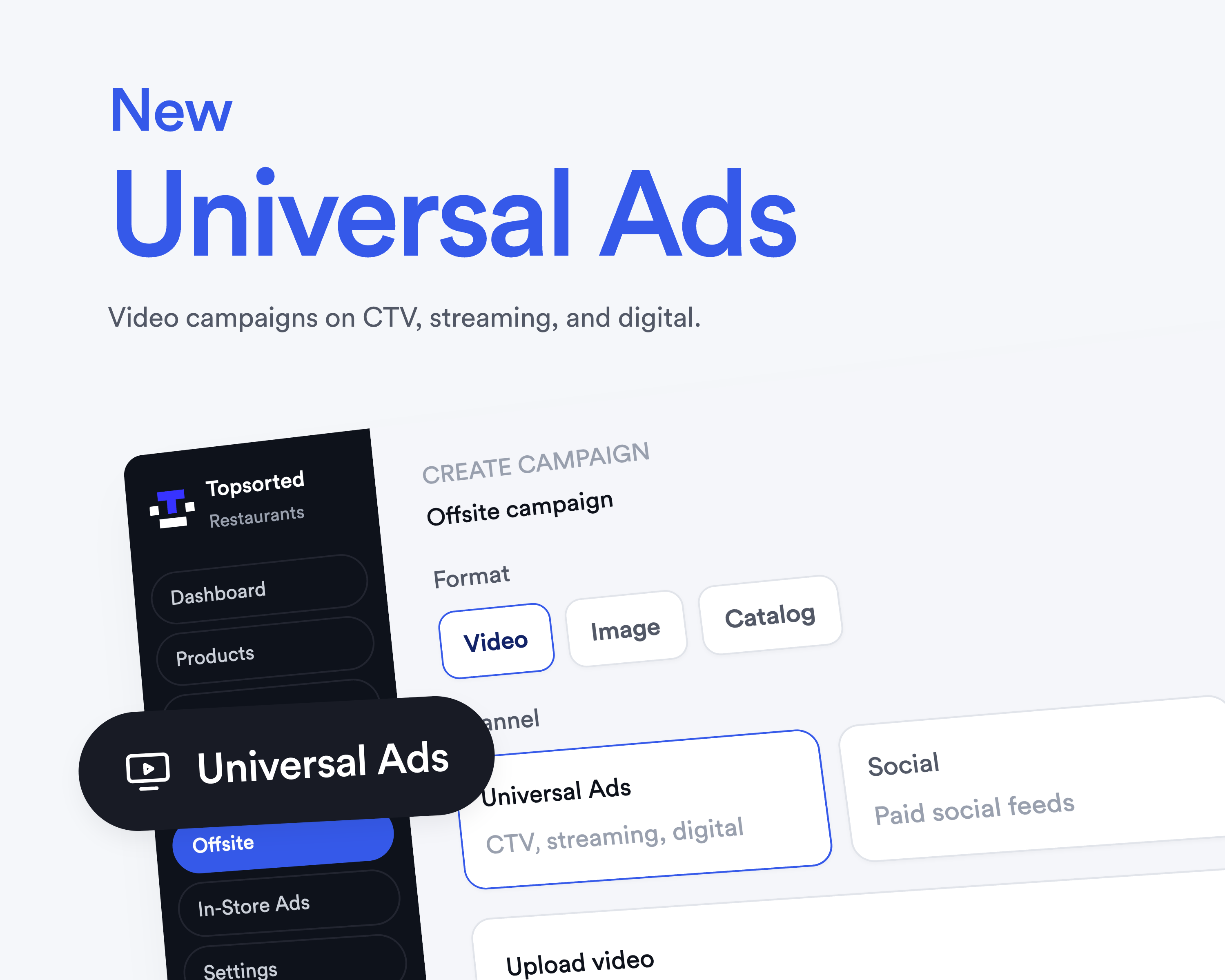
Yes. The same infrastructure that powers sponsored listings also supports sponsored brands, display banners, native placements, video ads, offsite advertising, and in-store media. Adding a new format does not require a new vendor or a new integration layer. The data model, attribution framework, and reporting layer are shared across every format the program adds over time.
What verticals does Topsort serve?
Topsort serves retailers, online marketplaces, grocery and delivery apps, travel platforms, classifieds, and B2B commerce platforms across North America, Latin America, Europe, Asia-Pacific, and the Middle East. The platform is built for any commerce operator running high-intent shopping surfaces where sponsored placements, display advertising, or offsite media can drive incremental revenue for sellers and brands.
.png)