What Is Retail Media Infrastructure? The Complete Guide for Retailers and Marketplaces
.png)
Retail media has become one of the fastest-growing areas of digital advertising. Retailers and marketplaces need technology that can manage campaigns, auctions, product relevance, ad delivery, measurement, and reporting, all within the commerce experience.
That technology layer is retail media infrastructure.
What Is Retail Media Infrastructure?
Retail media infrastructure is the underlying technology that enables retailers and marketplaces to create, operate, scale, and monetize advertising across their digital commerce experiences.
It connects advertisers with shoppers while managing everything from campaign creation and targeting to auctions, ranking, ad delivery, and measurement.
A Simple Example
A shopper searches for “running shoes.” Behind the scenes, the retail media infrastructure can:
- Identify relevant products.
- Determine which sponsored products are eligible.
- Evaluate campaign budgets and bids.
- Run an auction.
- Rank eligible products based on bid and relevance.
- Serve the winning ads.
- Track clicks and conversions.
- Report the results to the advertiser.
The shopper sees a sponsored product. The infrastructure makes that experience possible.
Why Does Retail Media Infrastructure Matter?
Retail media operates inside a commerce environment, meaning advertising has to work alongside search, product catalogs, inventory, pricing, and the shopper experience.
Effective infrastructure needs to balance:
- Relevance: Ads should match shopper intent.
- Performance: Advertisers need measurable results.
- Revenue: Retailers need to monetize inventory effectively.
- Speed: Ad decisions cannot slow down the shopping experience.
- Scale: Systems need to support growing catalogs, traffic, and advertisers.
- Flexibility: Different retailers and marketplaces have different requirements.
This makes retail media infrastructure fundamentally different from simply placing advertisements on a website.
What Does Retail Media Infrastructure Include?
Retail media infrastructure can include several interconnected components.
Campaign Management
Campaign management tools allow advertisers to create campaigns, set budgets and bids, select products, define targeting, and monitor performance.
Product and Catalog Data
Advertising systems need access to product information such as categories, attributes, pricing, availability, sellers, and inventory.
This becomes especially important for marketplaces with millions of products.
Candidate Retrieval and Relevance
Before an auction can run, the system needs to identify which products are relevant and eligible for a particular shopper or placement.
Modern systems can use search, semantic matching, behavioral signals, and other data to determine relevance.
Auction Infrastructure
Auctions determine which eligible sponsored products compete for a placement.
A sophisticated auction can consider more than just the highest bid. It can also incorporate relevance, campaign eligibility, product availability, and other signals.
Ranking and Ad Serving
Once candidates have been evaluated, ranking determines which products appear and in what order.
Ads can then be delivered across different commerce surfaces, including:
- Search results
- Category pages
- Product pages
- Recommendations
- Homepages
- Mobile apps
Measurement and Reporting
Retail media infrastructure tracks impressions, clicks, conversions, sales, spend, ROAS, and other performance metrics so advertisers and retailers can understand campaign impact.
Retail Media Infrastructure vs. Retail Media Network
These terms are related but describe different things.
- Retail media network: The advertising business operated by a retailer or marketplace.
- Retail media infrastructure: The technology that powers that advertising business.
In short:
Network = the business
Infrastructure = the technology behind it
Retail Media Infrastructure vs. Ad Servers
An ad server primarily handles ad delivery and tracking.
Retail media infrastructure goes further, supporting capabilities such as:
- Product retrieval
- Auctions and bidding
- Relevance and ranking
- Campaign management
- Measurement
An ad server can therefore be one part of a broader retail media infrastructure.
Retail Media Infrastructure vs. DSPs
A demand-side platform (DSP) helps advertisers buy advertising inventory programmatically.
Retail media infrastructure helps retailers and marketplaces create and monetize that inventory.
In simple terms:
DSP = helps advertisers buy media
Infrastructure = helps commerce businesses monetize media
The two can work together but serve different roles in the advertising ecosystem.
The Future of Retail Media Infrastructure
Retail media is moving beyond basic sponsored listings. As AI improves product relevance, campaign automation, performance analysis, and auction decisioning, advertising is expanding across more parts of the commerce journey.
This makes retail media infrastructure more than an advertising tool; it is becoming a commerce monetization layer connecting shopper intent, product inventory, advertising demand, and business outcomes.
Ultimately, retail media infrastructure is the technology foundation behind modern retail media, powering everything from product eligibility and auctions to ad delivery and measurement.
As retailers and marketplaces build more sophisticated advertising businesses, the right infrastructure will be key to scaling monetization while maintaining relevance and a strong shopper experience.
Frequently Asked Questions
What is retail media infrastructure?
Retail media infrastructure is the technology that enables retailers and marketplaces to create, manage, deliver, optimize, and measure advertising across their commerce experiences.
What is the difference between retail media and retail media infrastructure?
Retail media is the advertising business. Retail media infrastructure is the technology powering that business.
What technologies are included?
Common components include campaign management, product data, candidate retrieval, relevance, auctions, ranking, ad serving, measurement, and reporting.
Can marketplaces use retail media infrastructure?
Yes. Marketplaces can use it to monetize seller demand and product inventory through sponsored listings and other advertising formats.
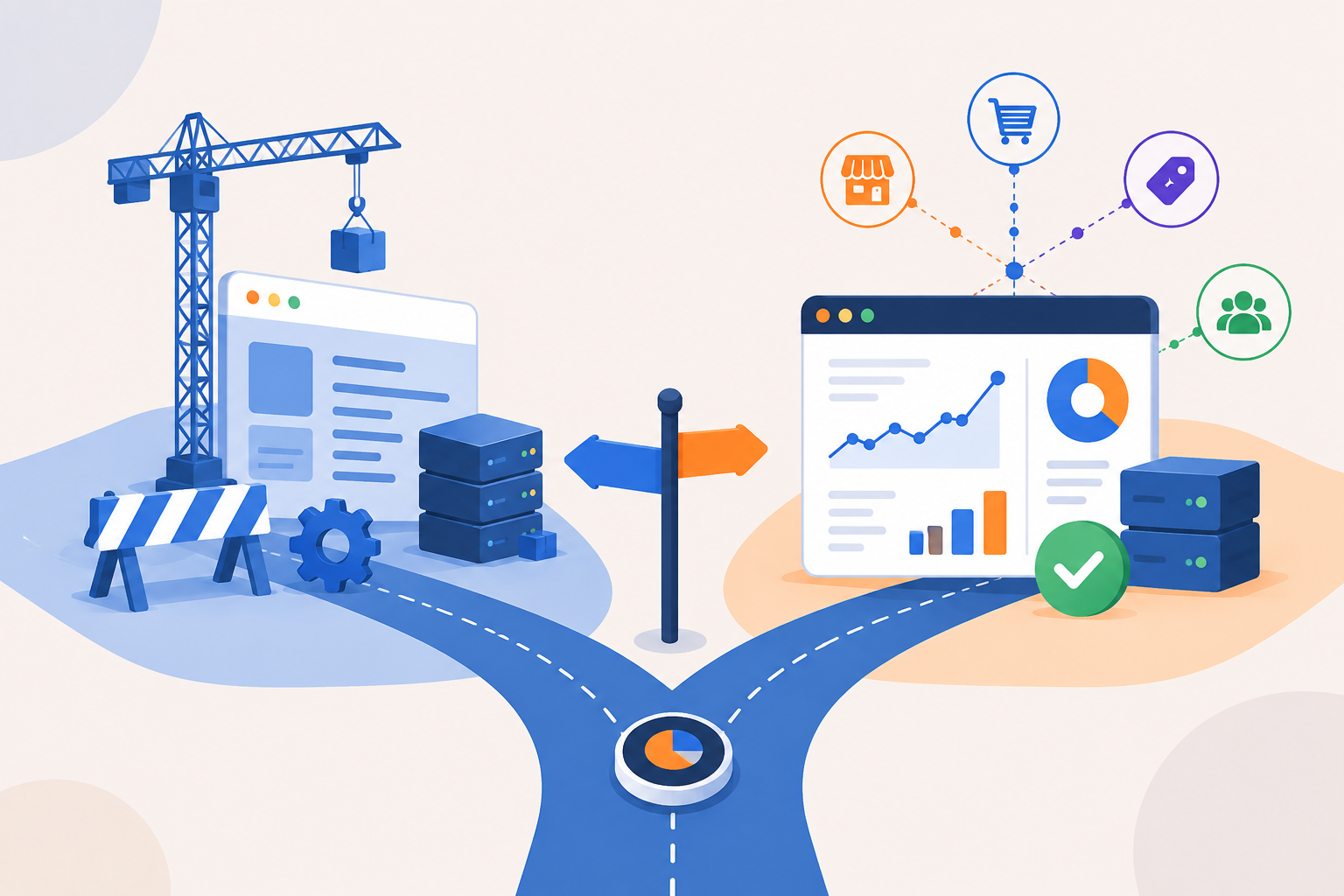
Should retailers build or buy retail media infrastructure?
It depends on technical requirements, engineering resources, and business goals. Many retailers use a combination of internal systems and third-party infrastructure.
.png)