ROAS vs Incrementality in Retail Media: What Advertisers Really Need to Measure
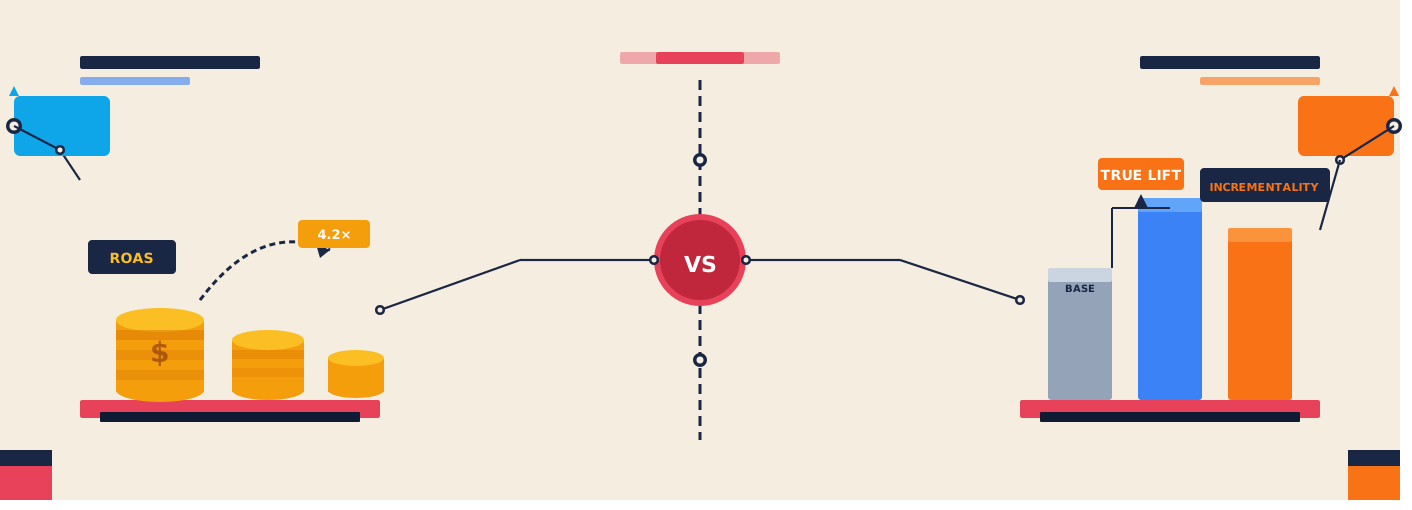
What is ROAS in retail media?
ROAS stands for return on ad spend. In retail media, ROAS measures how much attributed revenue a campaign generated compared with the amount spent on ads.
The formula is simple:
ROAS = attributed revenue / ad spend
For example, if a brand spends $10,000 on a sponsored products campaign and the platform attributes $80,000 in sales to that campaign, the campaign has an 8x ROAS.
ROAS is popular because it is easy to understand. It gives advertisers a quick view of campaign efficiency and helps media teams compare performance across products, placements, sellers, or brands.
ROAS is useful for:
- Daily campaign reporting
- Budget pacing
- Seller or vendor reporting
- Comparing short-term campaign efficiency
- Monitoring changes in performance
- Understanding which campaigns are producing attributed sales
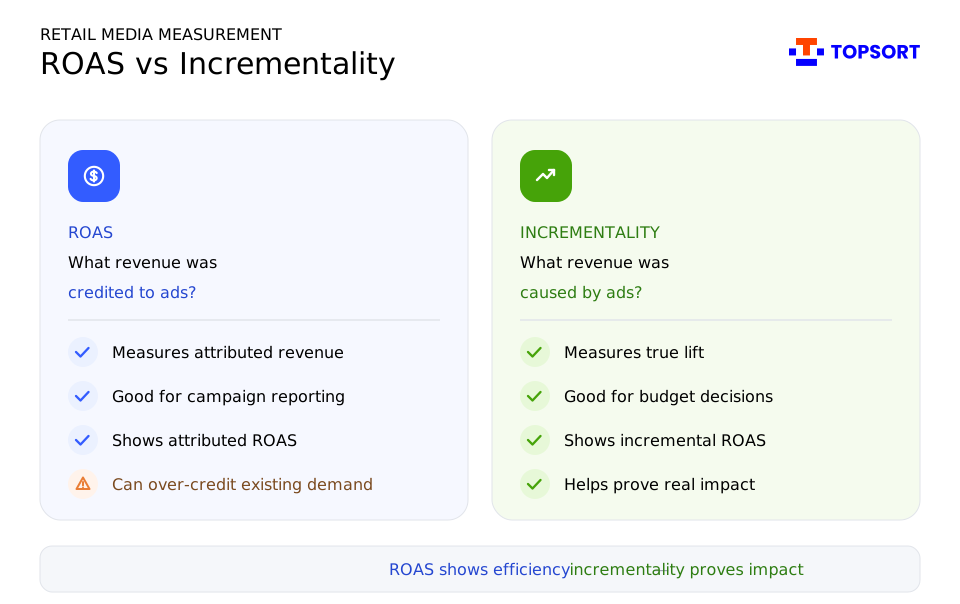
But ROAS has an important limitation: it measures attributed revenue, not necessarily incremental revenue.
What is incrementality in retail media?
Incrementality measures the additional conversions, revenue, orders, or customers caused by advertising.
In simple terms:
Incrementality answers: what happened because of the ad?
This is different from attribution. Attribution measures what happened after someone saw or clicked an ad. Incrementality estimates what would not have happened without the ad.
For example, a shopper may already be planning to buy a product. If they see a sponsored listing and then purchase that product, the campaign may receive attributed revenue. But if the shopper would have purchased the product anyway, the sale may not be fully incremental.
Incrementality helps separate true lift from baseline demand.
ROAS vs incrementality: the key difference
ROAS and incrementality answer different questions.
A simple way to think about it:
ROAS shows efficiency. Incrementality proves impact.
A campaign can have high ROAS but low incrementality if it mostly reaches shoppers who were already likely to buy. Another campaign may have lower ROAS but higher incremental impact if it brings in new customers, shifts demand from competitors, or grows a category.
That is why retail media advertisers should not rely on ROAS alone.
Why ROAS alone can be misleading
ROAS is helpful, but it can create an incomplete view of performance.
This is especially true in retail media because campaigns often appear very close to the point of purchase. A shopper may already be searching for a product, browsing a category, or comparing brands. When an ad appears in that moment, the campaign may receive credit for the purchase even if the shopper was already likely to buy.
Here are a few common situations where ROAS can be misleading.
1. The shopper was already going to buy
A sponsored product may appear to a shopper who already had strong purchase intent. If the shopper buys, the ad receives credit. But the campaign may not have created much additional demand.
2. Campaigns target loyal customers
Campaigns that reach existing loyal customers often show strong ROAS because those customers already trust the brand. But high attributed sales do not always mean the campaign generated new behavior.
3. Branded or high-intent searches can inflate performance
Ads shown on branded searches or very specific product queries may produce strong ROAS. However, some of those conversions may have happened organically.
4. Attributed revenue can overstate true lift
If a platform only reports attributed sales, advertisers may assume all credited revenue was created by the campaign. Incrementality helps identify how much of that revenue was truly caused by advertising.
5. Lower-ROAS campaigns may still create more strategic value
A campaign with lower ROAS may still drive new-to-brand customers, category growth, or competitor conquesting. These outcomes can be more valuable than short-term attributed revenue.
This does not mean ROAS is bad. It means ROAS needs context.
What is incremental ROAS?
Incremental ROAS measures incremental revenue compared with ad spend.
The formula is:
Incremental ROAS = incremental revenue / ad spend
For example, if a campaign spends $10,000 and generates $30,000 in incremental revenue, the incremental ROAS is 3x.
Incremental ROAS is often more useful for strategic decisions because it focuses on revenue caused by advertising, not just revenue attributed to advertising.
Advertisers use incremental ROAS to answer questions like:
- Should we increase budget?
- Which placements create the most true lift?
- Are sponsored listings driving new demand?
- Are offsite campaigns bringing shoppers back to purchase?
- Which campaigns are growing revenue beyond baseline sales?
For retail media networks, incremental ROAS can help prove the value of media inventory and build stronger advertiser relationships.
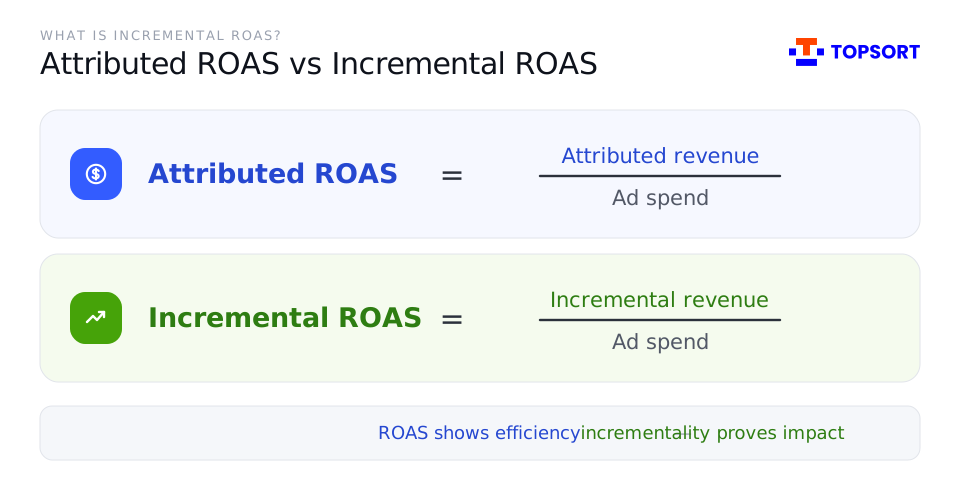
(ROAS shows efficiency. Incrementality proves impact.)
When should advertisers use ROAS?
ROAS is still an important metric. It is especially useful for campaign operations and short-term performance monitoring.
Advertisers should use ROAS when they need to:
- Monitor campaign efficiency
- Compare performance across campaigns
- Track attributed revenue
- Understand daily or weekly campaign trends
- Manage budgets and pacing
- Report performance to sellers, vendors, or internal teams
ROAS is fast, familiar, and easy to communicate. It helps advertisers understand whether a campaign is generating credited revenue.
But ROAS should not be the only metric used to evaluate retail media success.
When should advertisers use incrementality?
Incrementality is most useful when advertisers need to make bigger investment decisions.
Advertisers should use incrementality when they need to:
- Prove true media impact
- Decide whether to increase or reduce budget
- Understand whether campaigns are creating new demand
- Measure new-to-brand or new-to-seller impact
- Compare onsite, offsite, and in-store campaigns
- Evaluate premium placements
- Understand whether ads are shifting category share
- Measure the real business value of retail media
Incrementality is especially important for mature retail media programs. As budgets grow, advertisers want more than campaign activity metrics. They want proof that media spend is creating business outcomes.
How retail media networks should report both metrics
The strongest retail media programs do not treat ROAS and incrementality as competing metrics. They report both.
A useful retail media report may include:
- Spend
- Impressions
- Clicks
- Click-through rate
- Attributed sales
- Attributed revenue
- Attributed ROAS
- Incremental sales
- Incremental revenue
- Incremental ROAS
- Conversion lift
- New customer or new-to-brand impact
- Placement-level performance
This gives advertisers a more complete view.
ROAS helps answer: “How is the campaign performing day to day?”
Incrementality helps answer: “Is the campaign creating real business impact?”
Retail media networks that can answer both questions are better positioned to earn advertiser trust and grow budgets over time.
How to measure incrementality in retail media
Incrementality is usually measured by comparing an exposed group with a similar control group that was not exposed to the campaign.
Common methods include:
Test and control groups
A test group is eligible to see ads, while a control group is not exposed. The difference in outcomes helps estimate incremental lift.
Holdout testing
A portion of eligible traffic is intentionally held out from ad exposure. This helps estimate what would have happened without the campaign.
Geo or store-level testing
Campaigns are shown in certain regions or stores while similar regions or stores act as a control group.
Time-based analysis
Performance is compared before, during, and after a campaign. This approach is easier to run but needs careful interpretation because seasonality, promotions, and inventory changes can affect results.
Modeled incrementality
Statistical models estimate incremental impact using historical sales, campaign exposure, audience behavior, and other commerce signals.
The right method depends on the platform, campaign type, data availability, and business question.
Why retail media is well-positioned for incrementality
Retail media has a major advantage: commerce data.
Retailers and marketplaces often have access to first-party signals such as:
- Search queries
- Product views
- Category behavior
- Add-to-cart events
- Purchases
- Order value
- Product IDs
- Seller or brand data
- Inventory and pricing signals
- Repeat purchase behavior
These signals make it possible to connect ad exposure to commerce outcomes more directly than many other advertising channels.
But having the data is not enough. Retail media networks also need the right infrastructure to serve ads, track events, attribute purchases, run experiments, and report results clearly to advertisers.
How Topsort helps retail media teams measure real impact
Topsort helps retailers, marketplaces, delivery apps, and commerce platforms build retail media programs with API-first ad serving, auctions, sponsored listings, attribution, reporting, and AI optimization.
Because Topsort is built for commerce media, it helps connect ad delivery to the signals that matter most in retail environments: products, sellers, bids, budgets, shopper behavior, purchases, and revenue outcomes.
This gives retail media teams the foundation to move beyond basic campaign reporting and build more transparent, outcome-driven advertising programs.
With the right infrastructure, media teams can:
- Launch sponsored listings and commerce-native ad placements
- Track ad exposure, engagement, and purchase events
- Report attributed performance clearly
- Support more advanced measurement strategies
- Optimize campaigns based on commerce outcomes
- Build stronger trust with advertisers and sellers
In retail media, measurement is not just a reporting layer. It is a growth driver.
Final takeaway
ROAS and incrementality are both important, but they are not the same.
ROAS shows how much revenue was credited to a campaign. Incrementality shows how much revenue was actually caused by the campaign.
For advertisers, this distinction matters because strong attributed performance does not always mean strong business impact. For retailers and marketplaces, it matters because transparent measurement is key to winning and retaining advertiser budgets.
The best retail media programs use ROAS for campaign monitoring and incrementality for proving true impact.
That is how retail media moves from credited sales to measurable growth.
FAQ
What is the difference between ROAS and incrementality?
ROAS measures attributed revenue compared with ad spend. Incrementality measures the additional revenue, conversions, or orders caused by advertising.
Why is ROAS not enough in retail media?
ROAS can over-credit sales that may have happened without advertising. Incrementality helps advertisers understand whether campaigns created true lift.
What is incremental ROAS?
Incremental ROAS is incremental revenue divided by ad spend. It focuses on revenue caused by advertising, not just revenue attributed to advertising.
Is high ROAS always good?
Not always. A high ROAS may come from shoppers who were already likely to buy. Advertisers should also look at incremental revenue, customer lift, and conversion lift.
Should retail media advertisers optimize for ROAS or incrementality?
Advertisers should use both. ROAS is useful for campaign monitoring, while incrementality is better for proving true business impact and making budget decisions.
How can retail media networks improve advertiser trust?
Retail media networks can improve trust by reporting both attributed and incremental outcomes, explaining their methodology clearly, and connecting campaign performance to real commerce results
.png)
.png)