How a Major Supermarket Chain Grew Ad Spend 82.6% While Cutting Cost Per Click by 30%

H-E-B Was Ready. The Infrastructure Wasn't
H-E-B is one of the most recognized supermarket chains in its market. It’s a brand with deep consumer trust, high purchase frequency, and thousands of supplier brands looking to reach shoppers at the point of purchase. The ingredients for a strong retail media business were already there. The infrastructure to activate them wasn't.
By mid-2025, H-E-B's media program was running on manual processes with limited advertiser reporting and no automated optimization layer. The opportunity was clear: build retail media infrastructure that could turn existing supplier relationships and shopper demand into measurable, scalable revenue.
The Challenge
The issue wasn't demand. It was scale. Advertisers wanted clearer visibility into performance before committing to larger budgets. H-E-B wanted to move beyond manual optimization toward a system that improved with use. And the team needed a solution that could integrate into its existing commerce stack without a prolonged build cycle.
The foundation was there, but it was difficult to grow spend, demonstrate ROI, or turn retail media into a predictable revenue stream. H-E-B also needed whatever solution it chose to integrate into its existing commerce stack without a prolonged build cycle.
Why Topsort
H-E-B needed a partner that could integrate with its existing infrastructure quickly, support performance-based optimization rather than just ad serving, give advertisers self-serve controls and transparent reporting, and help the program improve over time as more campaign data accumulated.
H-E-B evaluated several options, including retail media capabilities already embedded in platforms it used. None met the bar. They were adequate for basic placements, but not built for a scalable, performance-driven program.
Topsort stood out for a few reasons. It already had a track record in H-E-B's market with other LATAM-based retailers like Liverpool and La Comer on the platform, H-E-B could see what modern retail media infrastructure looked like in practice, not just in a pitch deck.
Topsort's auction model is also built around outcomes: placements are prioritized using bid price and predicted conversion likelihood, so shoppers see more relevant ads, advertisers get better results for their spend, and the retailer builds a platform brands want to keep investing in. And Topsort integrates into existing commerce infrastructure without requiring a ground-up rebuild, enabling a faster launch than starting from scratch.
What They Built
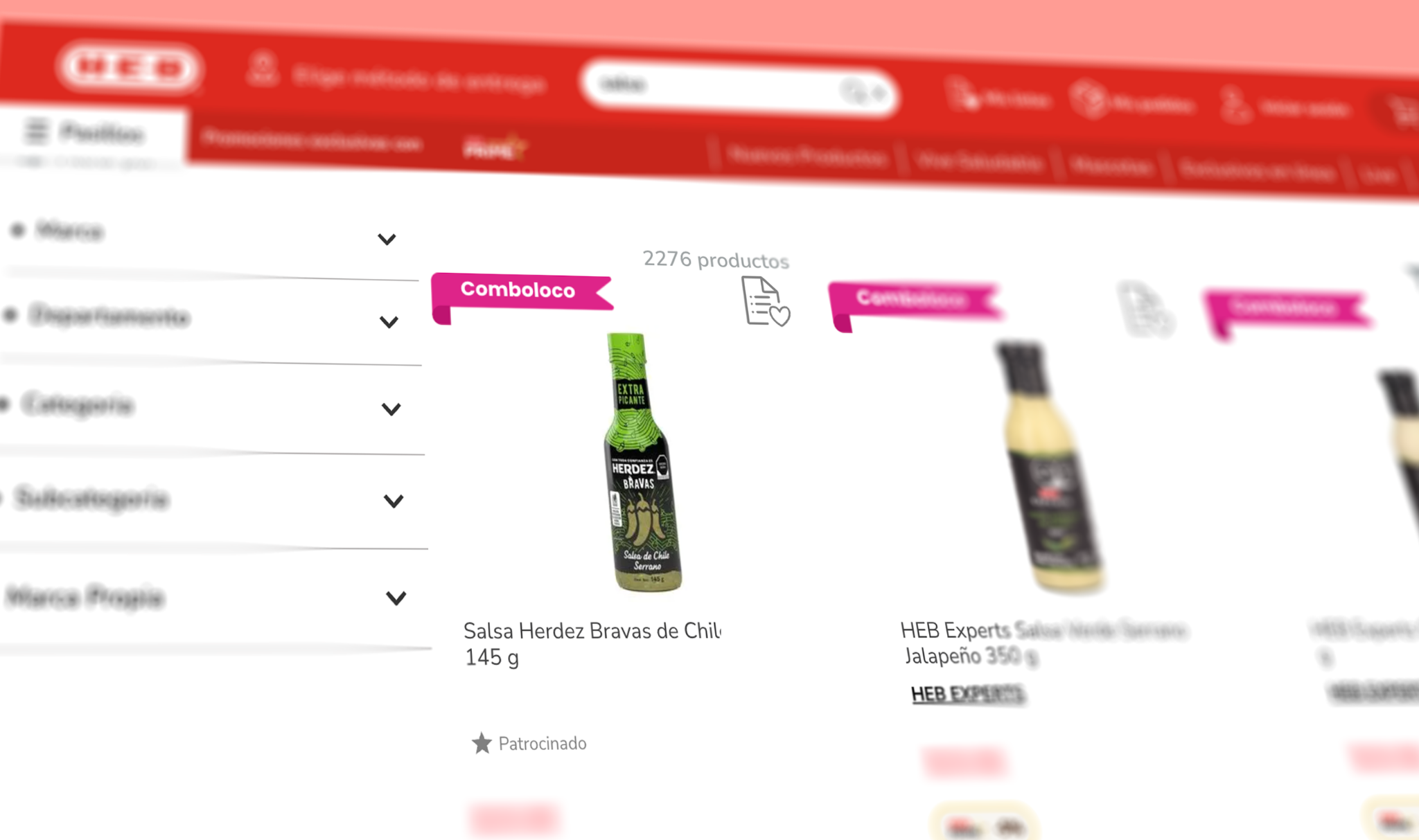
H-E-B launched on T-Platform, Topsort's complete retail media solution, deploying sponsored products across its digital commerce surfaces: search results, category pages, and key moments in the shopping journey. Advertisers got self-serve access with live performance reporting and budget controls. Each campaign improved the next: performance data fed back into the auction and reporting system, reducing the need for manual optimization and helping results strengthen over time.
The platform launched in late 2024. With each campaign, the system got smarter, improving auction decisions, strengthening advertiser results, and growing the active advertiser base.
The Results: A Standout Six-Month Period
The most important outcome wasn't a short-term lift. It was the creation of a stronger operating baseline. As the platform gathered more campaign data, H-E-B saw sustained gains across advertiser spend, attributed sales, and conversion volume, while efficiency improved at the same time.
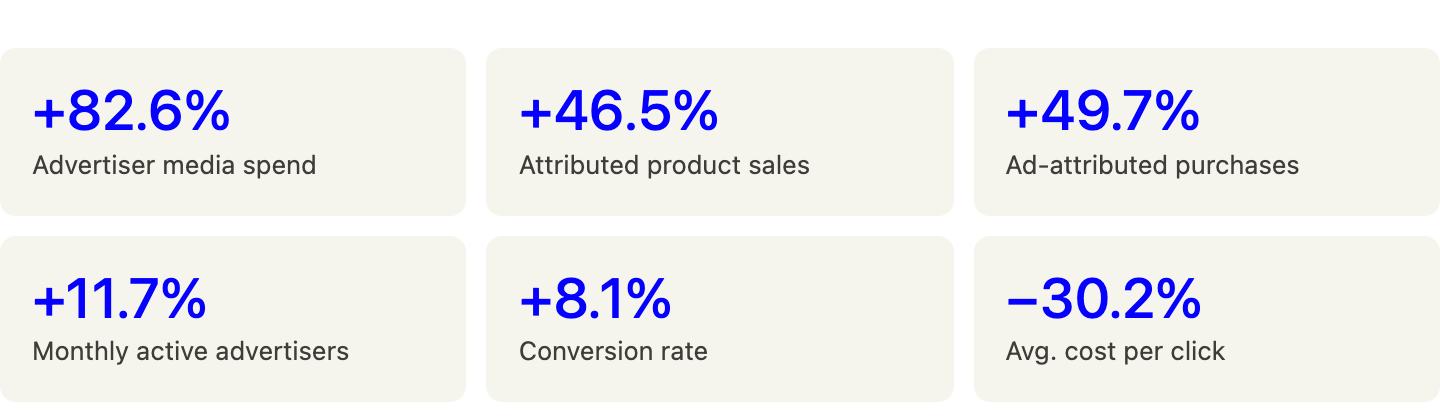
The combination is what makes these numbers credible. Advertiser media spend grew 82.6% while average cost per click dropped 30.2%. Attributed product sales grew alongside conversion rate, and volume increased without diluting quality. Active advertiser participation grew steadily and remained consistent over time. Brands that returned did so because results were sustained over time, not limited to an initial launch period.
Why It Worked
Performance transparency drives spend: Self-serve reporting gave advertisers clear visibility into campaign performance, increasing confidence and making it easier to justify growing budgets over time.
Better relevance improves everyone's outcome: Prioritizing ads by conversion likelihood, not just bid price, meant shoppers saw more relevant placements, advertisers got stronger ROI, and the retailer built a platform brands kept investing in.
Systems that learn create durable advantages: Performance data fed back into the platform with each campaign. Results improved automatically over time, without requiring the internal team to manually tune what was already working.
Fast integration lowers time to value: T-Platform connected to H-E-B's existing infrastructure without a ground-up rebuild, reducing internal friction and getting the program generating revenue faster.
The Takeaway
H-E-B already had the core assets of a strong retail media business: shopper attention, supplier relationships, and valuable digital real estate. The unlock was infrastructure that could connect those assets to measurable outcomes. Once advertisers could see performance and optimization improved automatically, retail media shifted from a manual monetization effort to a scalable growth channel—one that gets stronger with every campaign.
What's Next
With the core retail media program now producing sustained results, H-E-B has expanded into additional demand channels through the Toptimize SSP, Topsort's demand network. That gives H-E-B access to spend from external brands and agencies beyond its direct advertiser base, increasing competition for inventory and adding another layer of revenue growth on top of an already improving system.