




Topsort Fall Update 2026 Recap: From Agentic Commerce Control to Large Commerce Model
Meet T‑Brain, explore standalone Tomi, and see how AI is changing auctions, business analytics and agent-driven shopping.
October 5th, 2026
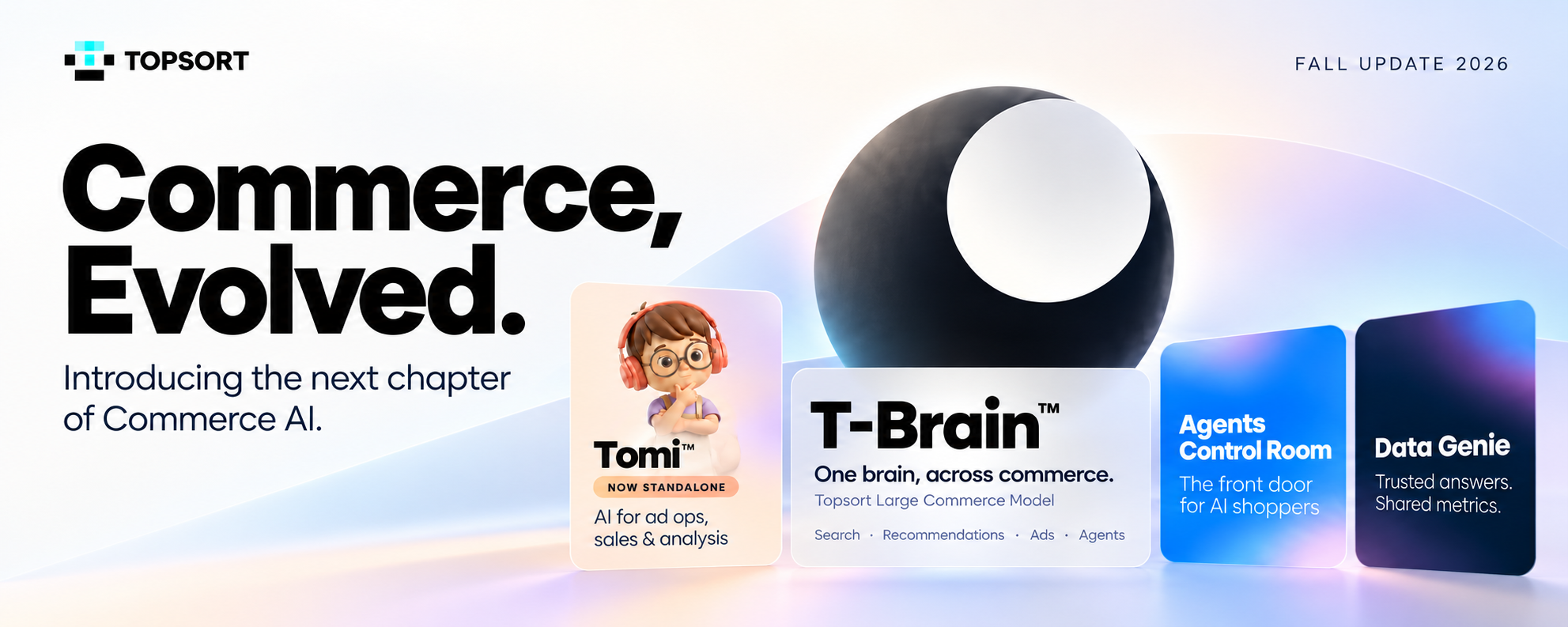
Topsort began by making advanced auction and advertising technology accessible to retailers and marketplaces. As our systems powered billions of commerce decisions across more than 100 marketplaces, we developed intelligence around products, shoppers, relevance and commercial outcomes.
At Topsort Fall Update 2026 in Boston, we shared the next chapter: extending that intelligence across commerce, with models and agents that help businesses understand demand, make decisions and get work done.
Commerce is changing. People are discovering products in new ways, AI agents are becoming part of the shopping journey, and decisions about search, recommendations, advertising and personalization are increasingly connected. During the 2026 Prime Day period, shoppers arriving from AI sources converted 40% better than non-AI channels. A year earlier, AI traffic had converted 23% worse. The latest feud between Meta, Amazon and Shopify only tells us the scale of the problem and how quickly we need a solution.
At Topsort Fall Update 2026, we shared where that journey is taking us next: from intelligence built for advertising to intelligence built for commerce, and the star of the show? T-brain, Topsort’s product in enterprise commerce AI, and its first model. Theo.
We introduced T-Brain, our first Large Commerce Model, showed new AI experiences including Tomi, Data Genie, and the agentic retailer copilot, and explored what commerce infrastructure needs to look like in an AI-first world. Researchers, customers, operators and engineers joined us to explore what commerce infrastructure needs to do in an AI-driven world.
The shift in shopping behavior is already measurable. Adobe reported that AI-referred traffic to U.S. retail sites grew 393% year over year in the first quarter of 2026. Shopify reported that AI-referred orders grew nearly 13 times year over year during the same period. AI is becoming a meaningful part of how shoppers discover products and arrive at purchase decisions.
Our announcements addressed the infrastructure behind that shift: T‑Brain for commerce intelligence, standalone Tomi for operations, Data Genie for business answers, and Agentic Control Room for visibility into agent-driven shopping. MIT professor Costis Daskalakis joined us to explore the connection between AI and auctions.
T‑Brain: A Large Commerce Model Built to Understand What Shoppers Do Next
Finding the right product requires understanding more than the words in a query. It involves the catalog, the shopper’s context, relationships between products and the signals that indicate what someone is likely to do next.
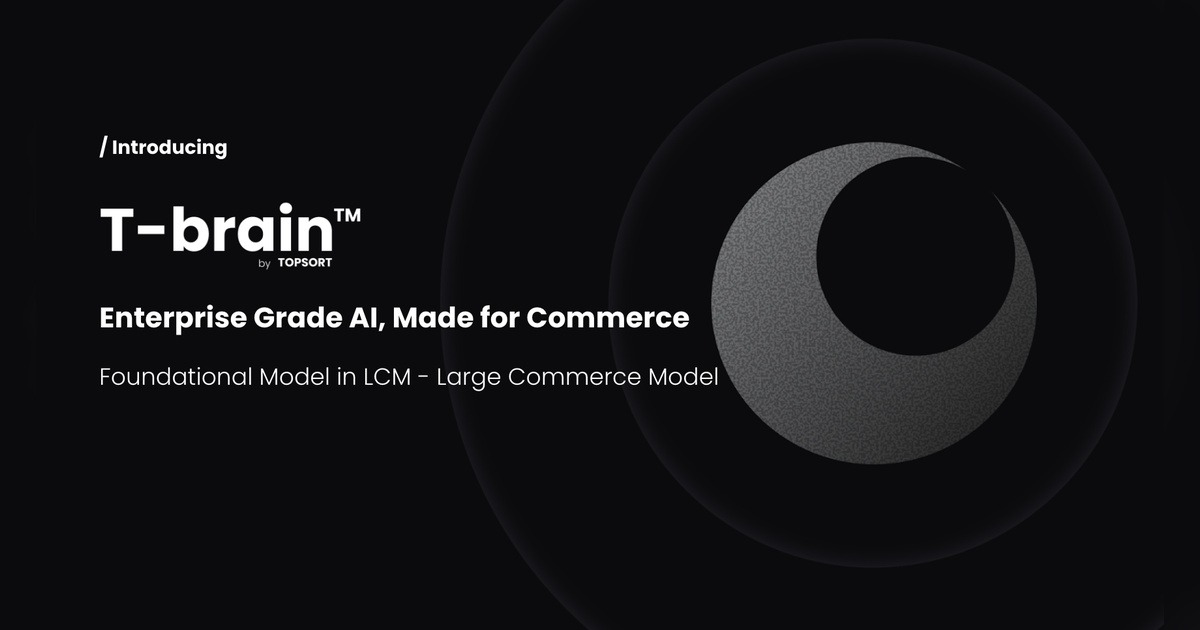
At Fall Update, we unveiled T‑Brain, Topsort’s first Large Commerce Model (LCM), a commerce-specific foundation model designed to learn those relationships. T‑Brain supports search, retrieval, ranking, recommendations, advertising and agentic commerce experiences. It adapts to an enterprise’s catalog, shopper behavior and commerce environment, providing shared intelligence across these tasks.
For a retailer, that means the understanding used to retrieve a relevant product can also inform how products are ranked, what gets recommended and which sponsored placement makes sense. For an agent, it provides commerce context to support product discovery and decision-making.
T‑Brain builds on intelligence developed through billions of commerce decisions. It is already in production with select existing customers. As shared in our announcement, preliminary results show 21% improvement in retrieval and 26% improvement in conversion on the commerce surfaces where it has been applied.
See more about T-Brain See more about T-brain
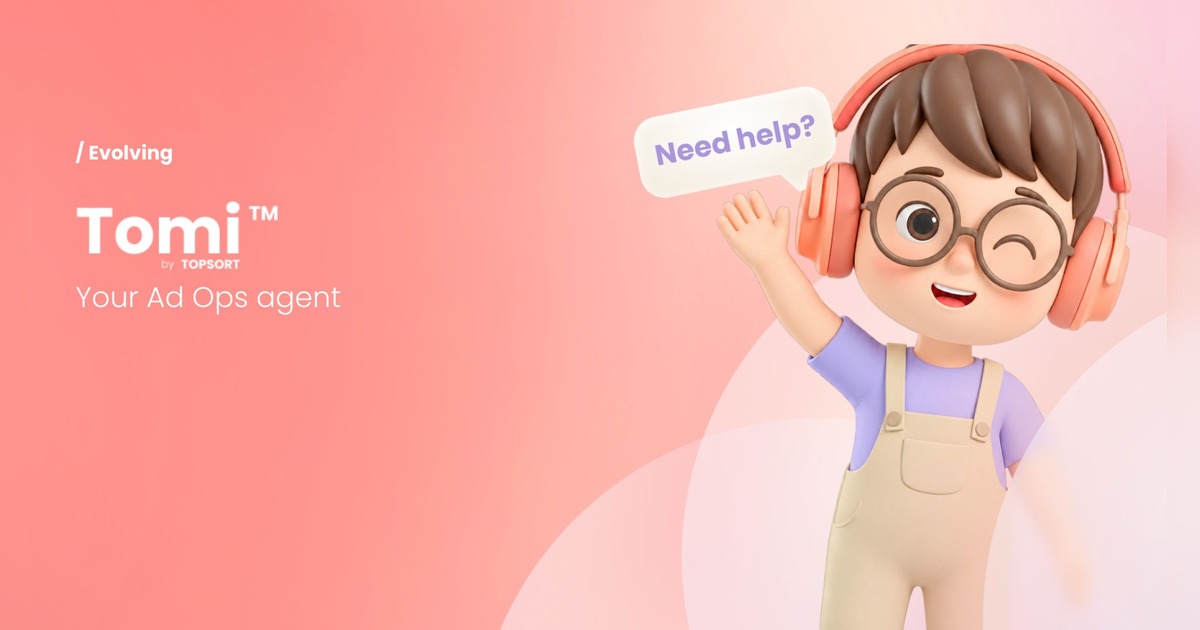
Standalone Tomi: Commerce Operations Agents for the Ad Servers You Already Use
A commerce team might need to build a campaign, investigate performance or adjust spending across multiple campaigns. Each task depends on understanding the business and turning that understanding into action.
We introduced standalone Tomi, our AI agent for commerce operations, designed to sit on top of other agents and bring commerce capabilities into the AI workflows a business chooses. The best part? Tomi can sit on top of any ad server that is in market, yes that includes any inhouse, legacy, or competitive ad servers (and we call it ad engine).
Tomi helps teams create campaigns, identify performance issues, recommend changes and apply approved updates. Teams can describe a goal or problem in natural language, review the proposed actions and put them into effect within their permissions.
Making Tomi available as a standalone product expands where those capabilities can be used. Commerce operations can become part of the agent workflows teams already work with, bringing business context and execution closer together.
Agentic Traffic Control Room: Visibility into a New Shopping Channel
As AI agents become part of product discovery and shopping, retailers need to understand how that activity affects their businesses. Adobe reported that AI-referred traffic to U.S. retail sites grew 393% year over year in the first quarter of 2026. Shopify reported that AI-referred orders grew nearly 13 times year over year during the same period. AI is becoming a meaningful part of how shoppers discover products and arrive at purchase decisions.
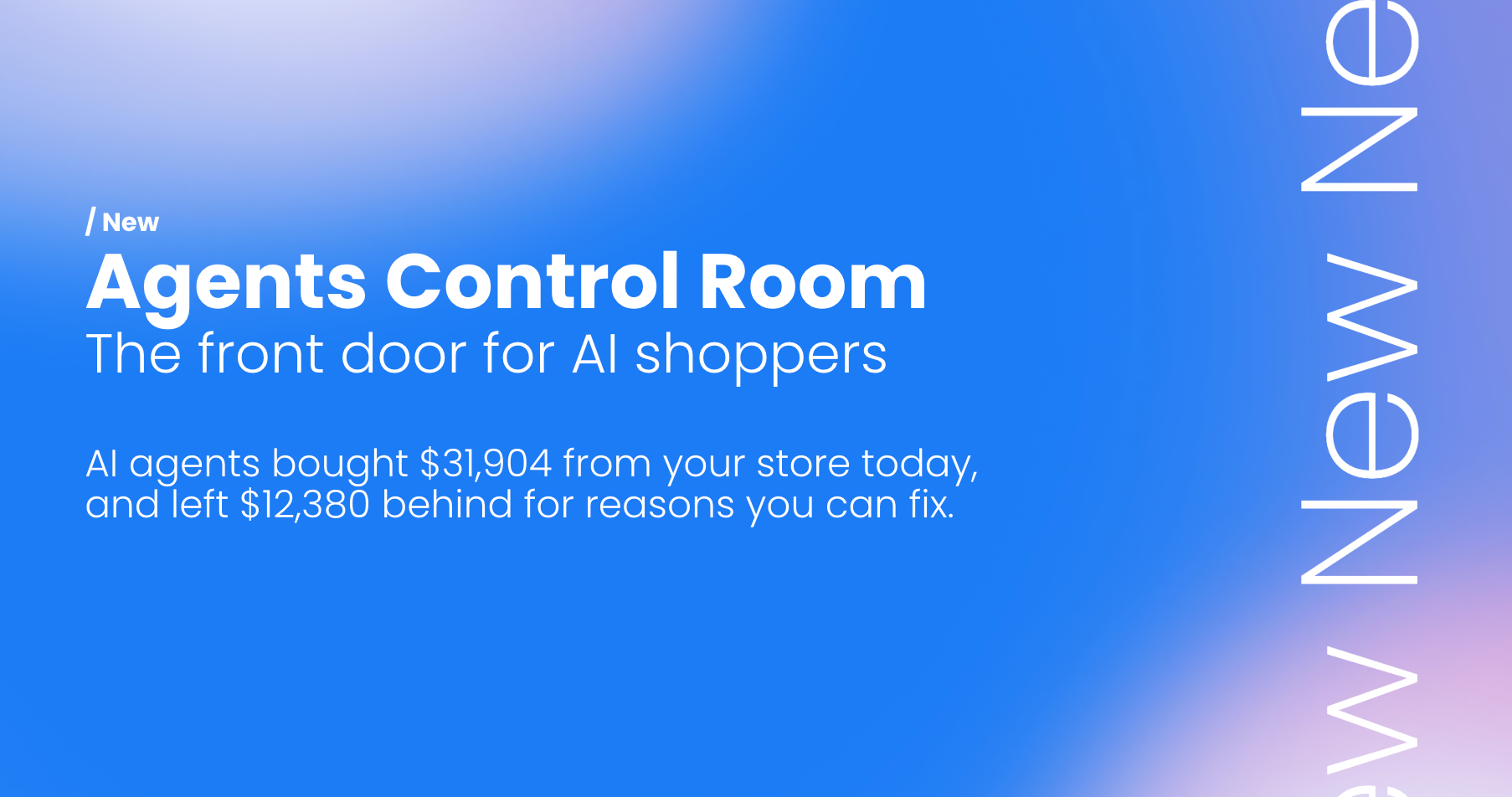
We also showed Agentic Control Room, designed to give commerce businesses visibility into agent-driven shopping and help them understand and manage agentic traffic.
The need is already emerging. Reuters has reported on retailers working to attract AI shopping referrals while seeking to retain direct customer relationships and control over their transaction data.
Our view is that agent-driven shopping should become a channel businesses can understand and operate. As more discovery happens through external AI experiences, merchants need visibility into that activity so they can make informed decisions about how to participate.
Learn more about Agentic Control
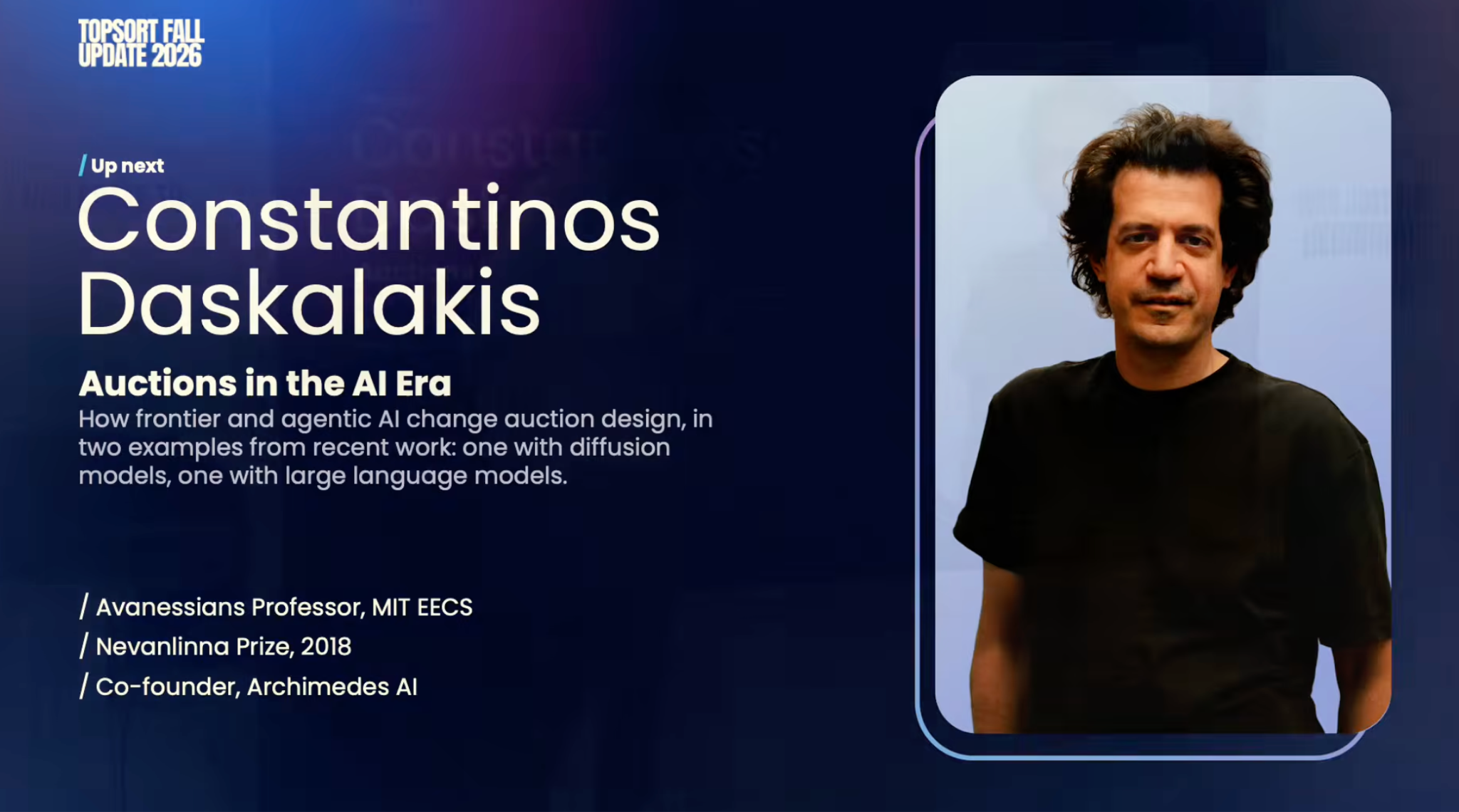
AI for Auctions: A Research Perspective from MIT’s Costis Daskalakis
Commerce depends on decisions about what gets shown, how opportunities are allocated and how buyers, sellers and advertisers participate.
Constantinos “Costis” Daskalakis, Avanessians Professor of Electrical Engineering and Computer Science at MIT, joined Fall Update to explore AI and auctions. His research spans machine learning, game theory and the mathematical foundations of auction design.
For Topsort, this connection is central to the systems we build. Models estimate relevance, intent and likely outcomes. Auction mechanisms use those signals alongside bids and business objectives to determine how opportunities are allocated.
As agents take on more decisions in commerce, we believe both the quality of those predictions and the design of the market mechanisms will become increasingly important. Costis’s session brought a research perspective to that discussion.
Data Genie: Ask a Business Question. Build the Report.
Commerce teams need to understand what is happening before deciding what to do next.
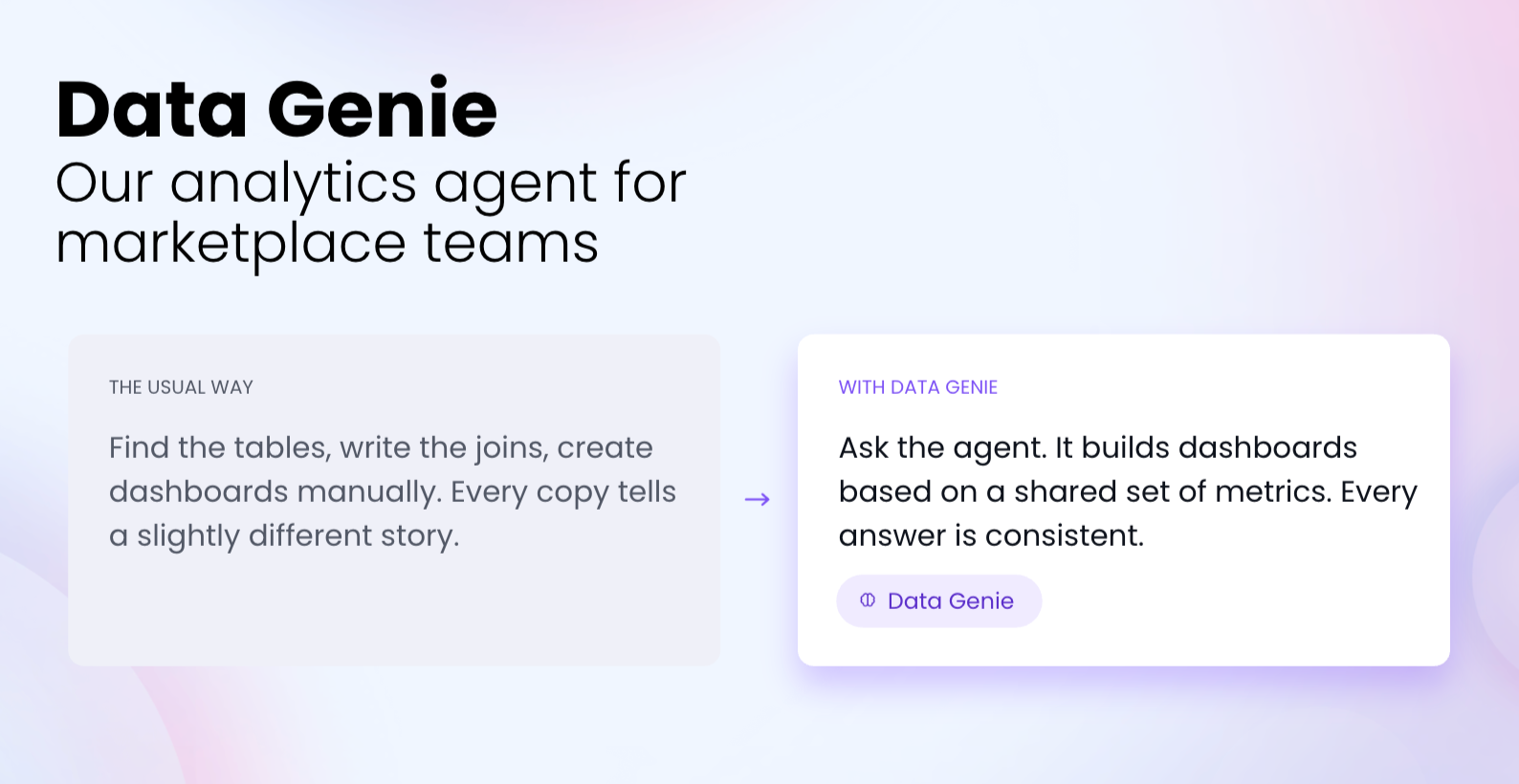
At Fall Update, we demonstrated Data Genie, which lets users ask questions in natural language and generate reports from the data available to them. Teams can also select the metrics and dimensions they want to analyze without needing to understand how the underlying data tables connect.
A question such as “Show me revenue by category this month” becomes a starting point for exploring performance. Reports and dashboards help teams investigate the numbers and share their findings with colleagues.
The goal is to make business analysis accessible to the people making daily commercial decisions, with less manual work between a question and a useful answer.
Commerce Intelligence that Evolves
These announcements reflect a shared direction, and marks just the beginning of the great technology shifts and commerce patterns we’re observing.
T‑Brain provides enterprise AI intelligence across commerce tasks. Standalone Tomi brings operational capabilities into agent workflows. Data Genie helps teams understand business performance. Agentic Control Room brings visibility to agent-driven shopping. Research in AI and auctions helps us think through how the underlying markets should work.
Together, they represent the next chapter of Topsort: extending the capabilities developed in commerce media into the intelligence and tools that support commerce more broadly. Thank you to everyone who joined us in Boston. We’ll continue sharing product demos, research discussions and technical sessions from Fall Update.
”Retail Media was just beginning. Welcome to Commerce AI”
Retailers, marketplaces and commerce platforms can explore T‑Brain or connect with our team to discuss T‑Brain, standalone Tomi, Data Genie and Agentic Control Room.
¹ Adobe’s reported 393% increase in AI-referred traffic to U.S. retail sites compares January–March 2026 with the same period in 2025. Source: Adobe Digital Insights, April 2026.
² Shopify’s reported nearly 13-fold increase in AI-referred orders compares Q1 2026 with Q1 2025. These figures describe orders attributed to AI referrals on Shopify storefronts and do not necessarily represent purchases completed autonomously by AI agents. Source: Shopify’s Q1 2026 commerce data.
³ T‑Brain’s reported 21% improvement in retrieval and 26% improvement in conversion reflect preliminary results from early production deployments with select existing Topsort customers, limited to the commerce surfaces where T‑Brain was applied. Results may vary by customer and implementation.
⁴ As announced on September 30, 2026, T‑Brain is in production with select existing customers. Contact Topsort for current availability and supported integrations for the products and capabilities featured in this post.
Tags: Commerce AI · T‑Brain · AI Agents · Auctions · Product Updates